Huawei Aito M9 Debuts in China with Both EV & REEV Versions


The Huawei-backed Aito M9 debuts in China, featuring both standard and range-extender EV versions
Chinese tech giant Huawei has revealed its latest flagship SUV today in China, cordially known as the Aito M9. For those who aren’t familiar with Aito, this new EV marque is borne out of Huawei’s collaboration with Seres, with the latter being responsible for vehicle production and manufacturing, while Huawei is in-charge of supplying the car’s major parts and software.


Visually, the M9 boasts some familiar design cues that we’ve seen on the Luxeed S7 – a sleek EV saloon borne out of Huawei’s partnership with Chinese automaker Chery. Featuring a clean, elongated body style with rounded edges, the M9 full-size SUV sports triangular-shaped adaptive LED matrix headlights with a full-width light bar connecting the pair, LED taillights with pixelated signatures, and a full panoramic glass roof.
Aside from the massive 22-inch optional multi-spoke wheels this EV SUV rides on, the M9’s side part also features flushed door handles, as well as the ‘HIMA’ logo on its D-pillars. Stands for Harmony Intelligent Mobility Alliance, this initiative was helmed by Huawei with several automakers like Luxeed (Chery), BAIC Motor, JAC Motor, and of course, Aito.

The M9 comes strictly in a three-row, six-seater layout, with a 2-2-2 seating configuration
Thanks to its large footprint, the Aito M9 boasts a three-row, six-seater layout with a 2-2-2 configuration, with all of them featuring both heated and ventilated functions while being wrapped in plush Nappa leather upholstery. The two mid-row seats support full-reclining functions, while the front passenger unit comes with a built-in ottoman support. Massage functions, on the other hand, are only reserved for the two front seats.


Aside from the plush seats, other comfort amenities like three-zone climate control, a N95 cabin filter with PM2.5 air quality monitoring, a 25-speaker, 2080-watt premium audio system, a massive 32-inch retractable screen, and dedicated infotainment displays for all four rear passengers are all present inside the M9.


Being developed by a globally-renowned tech giant, the M9’s cabin is nothing short of tech-laden, with the front dash featuring no less than three screens – a 12.3-inch digital instrument cluster, a 15.6-inch central infotainment display, and a 16-inch unit dedicated to the front passenger – all powered by Huawei’s Harmony OS4. Drivers, meanwhile, get a massive 75-inch head-up display with augmented reality functionality that can project driving aids and much more.


Thanks to its built-in projector, the M9 is essentially a giant, drivable movie theatre!
Screens aside, the M9’s adaptive LED matrix headlights feature an integrated projector that can display images or graphics at up to 100-inch in size, allowing you to transform this EV into a mobile giant projector.


The M9 comes in both standard EV and a range-extender EV (REEV) versions
On the powertrain front, the Huawei Aito M9 is offered in two versions in China, one being the standard EV model, while the other is a range-extender EV (REEV) version, which features a small ICE as part of its powertrain setup. For the former version, the M9 is powered by a dual-motor AWD setup rated at 523 HP (390 kW) and 673 NM, which is good enough to drive this big EV SUV from nought to 100 KM/H in just 4.3 seconds and a limited V-max of 200 KM/H.
Meanwhile, the REEV variant houses a 1.5-litre 4-cyl petrol mill that acts as a generator for its 42/52-kWh ternary battery pack, which in turn juices its dual-motor AWD setup rated at 489 HP (365 kW) and 675 NM. This setup grants the M9 REEV a slower century sprint time of 4.9 seconds compared to the EV version and the same 200 KM/H V-max.


On the range front, the M9 REEV’s 42-kWh battery pack is good for up to 1,210 KM of max WLTC range, while the bigger 52-kWh unit boasts a longer 1,239 KM max WLTC range. On the other hand, the M9 EV’s 100-kWh ternary lithium unit grants it a decent CLTC-rated max range of 630 KM. While both variants support AC charging at 11 kW, the EV model’s pack can be charged from 30% to 80% in just 15 minutes, while the REEV model gets from 20% to 80% in 30 minutes, with no mention of the exact DCFC rates for both models.
Now open for bookings in China, the all-new Huawei Aito M9 EV starts at CNY 469,800 (RM305,650) for the base REEV Max variant, while the baseline EV variant starts higher at CNY 509,800 (RM331,674). Similar to the many barrages of EVs launched in the Great Wall market recently, there’s no mention of any plans to export the M9 into other international markets, at least for now.

Gallery


Written By
Mukhlis Azman
An avid two-wheeler that writes and talks about four-wheelers for a living, while dreaming of an urban transit-laden Malaysia. @mukhlisazman


JPJ Running Numbers
KUALA LUMPUR
VRQ9827
SELANGOR
BST8963
JOHOR
JE5916J
PULAU PINANG
PSF7343
PERAK
APL6244
PAHANG
CFH7982
KEDAH
KGJ2151
NEGERI SEMBILAN
NEL9551
KOTA KINABALU
SJU2247
KUCHING
QAB6004P
Last updated 24 Sep, 2026
Fuel Price
Petrol
RON 95
RM 3.97
+1.38
RON 97
RM 4.90
+1.75
RON 100
RM 7.20
+2.20
VPR
RM 8.23
+2.00
Diesel
EURO 5 B10
RM 5.12
+2.08
EURO 5 B7
RM 5.32
+2.08
Last updated 30 Apr, 2026
Related News

ChargeSini, Sunway And Huawei Enter Tri-Party MoU Agreement
ChargeSini, Sunway, and Huawei formalises tri-party MoU agreement at Malaysia Autoshow 2024 (MAS 2024) to accelerate EV charging infrastructure development.

29-05-2024
Latest News
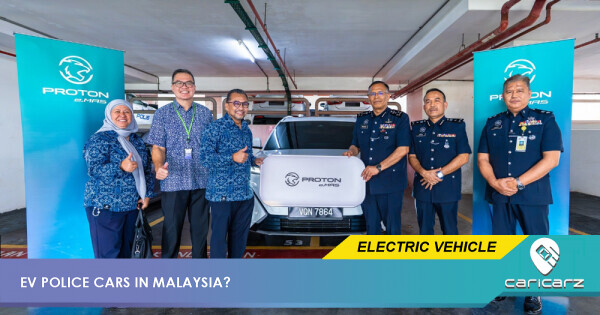
Could An EV Really Work As A Malaysian Police Car? PDRM Is Finding Out
PDRM is testing the Proton e.MAS 5, e.MAS 7 EV and e.MAS 7 PHEV to see whether electrified vehicles could work for Malaysian police duties.

18-09-2026
Malaysia's Electricity Protection Is Now 800 kWh - How Much Power Does An EV Use Per 100 KM?
Malaysia's electricity protection threshold is now 800 kWh. Here's how much electricity popular EVs use per 100 km and what the extra 200 kWh means.
18-09-2026
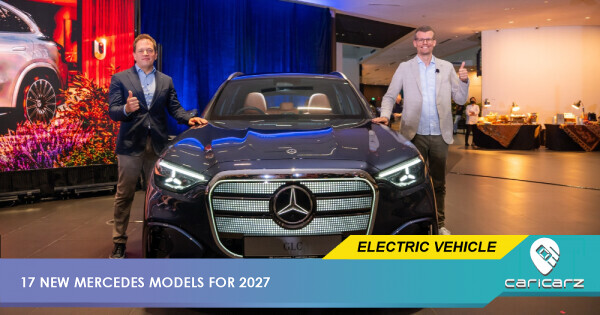
17 New Mercedes Models Are Coming To Malaysia In 2027 - Here's What We Know
Mercedes-Benz Malaysia plans 17 new models for 2027, with most set for local assembly in Pekan. Here's what we know about its ICE and EV plans.
17-09-2026
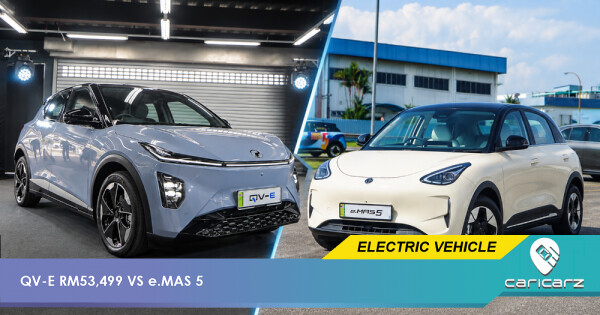
Perodua QV-E Now At RM53,499 Vs Proton e.MAS 5: Which Makes More Sense?
Perodua QV-E now starts at RM53,499 with BaaS under its Malaysia Day promo. See how it compares with the Proton e.MAS 5 on price, range, charging and features.
16-09-2026
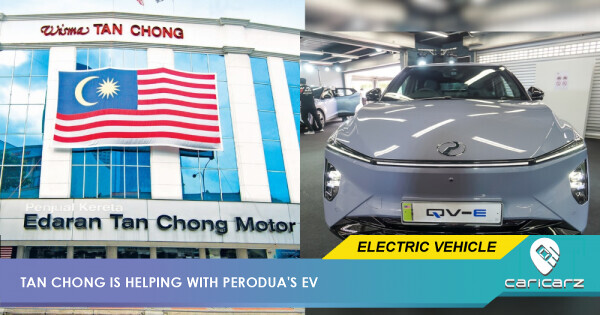
Yes, Tan Chong Is Involved In Perodua's EV. Here's What It's Actually Doing
Tan Chong has signed a three-year agreement to support Perodua's EV production with ED coating, painting and assembly-line services.
15-09-2026

BYD Has A New Plan For Malaysian-Made Cars, And It's Not Tanjung Malim
BYD has dropped its Tanjung Malim plant plan but says Malaysian CKD remains on track, with talks with an unnamed local partner at an advanced stage.
11-09-2026

Malaysia's EVs Are Growing Fast. The Chargers? Not So Much
Malaysia's EV registrations are surging, with 122,286 registered by July 2026. But can the country's 6,416 public EV chargers keep up?
10-09-2026

Could The Proton e.MAS 7 PHEV Get 230 KM EV Range And AWD Next? Its China Twin Says Maybe
The Proton e.MAS 7 PHEV's Geely twin is getting a larger 40.06 kWh battery, around 230 KM WLTP EV range and AWD. Could Malaysia get them too?
10-09-2026
Show More
trending_flat