The Truth Behind ‘Low Battery’ Status at Some EV Charging Stations This Raya


You’ve seen the status on your app: “Station Battery Low.” You’ve felt the frustration: plugging into a 180kW-rated charger only to see it crawling at 20kW. This Raya, the Malaysian EV community has hit a literal wall, and it isn’t a grid failure. It’s a “Bucket and Tap” crisis that most people don’t even know exists.
The Inception of Charging: Charging the Charger
Most drivers assume that an EV charger is a direct "pipe" to the national grid. But at many of our busiest R&R stops, that simply isn't the case. Because our highway electrical infrastructure wasn't originally built for such massive, sudden power draws, operators like Gentari and JomCharge have deployed Battery Energy Storage Systems (BESS) at strategic locations to bridge the gap.
Think of it like a giant power bank. The station "trickles" energy from the grid into a massive on-site battery, which then "discharges" that energy quickly into your car.
The Raya Stress Test: When the Bucket Runs Dry
On a normal Tuesday, BESS works perfectly. But during the 2026 Raya rush, we’ve seen the technical limit. When car after car plugs in, the "bucket" (the BESS) empties faster than the "tap" (the grid) can refill it.

A charger with a 'Low Battery'? This irony is sparking a massive debate on Threads right now.
When you see that "Low Battery" status on the charger, the station isn't broken, it's exhausted. To protect its own battery health, the system throttles the speed. You aren't getting 180kW because the station literally doesn't have it to give.
Are ALL Stations Like This?
We need to distinguish between two types of hubs:
- BESS-Integrated Hubs: Typically found at highway lay-bys (like Behrang or Senawang) where the grid is weak. These are modular units that "store" power. They are brilliant for accessibility but have a "stamina" limit during festive seasons.
- Grid-Direct Hubs: Found in major city centers, newer industrial parks, and high-capacity petrol stations. These pull directly from a high-voltage TNB substation. If you want consistent, un-throttled speed during Raya, these are your best bet, even if it means exiting the highway for 10 minutes.
The Technical Proof: Why the Math Doesn’t Add Up
To understand why your charging speed is crawling, you have to look at the hardware hidden inside those modular containers. Most of the BESS units currently deployed at high-traffic spots like Behrang and Senawang are 300kWh units.
On paper, 300kWh sounds like a lot. But let’s do the math:
- A modern long-range EV (like an Ioniq 6 or BYD Seal) has a battery capacity of roughly 77kWh to 82kWh.
- If four of these cars show up back-to-back with 10% battery and want to charge to 80%, they will pull approximately 220kWh to 240kWh from that storage tank.
- The Result: By the time the 5th car plugs in, the "bucket" is effectively empty.
During a typical Raya rush where 10 to 15 cars might arrive per hour, the BESS is being drained 3x faster than the local grid can refill it. This is why the station hits "Low Battery" status, it’s not broken, it’s just physically out of juice and waiting for the "trickle" from the grid to catch up.
Quick Guide: BESS vs. Grid-Direct Hubs


How to Beat the "Empty Bucket" This Week


If you're heading back to the city after Raya", here is your technical survival guide:
- Check the App for Battery Icons: Apps like JomCharge and Gentari often show the station’s own SOC (State of Charge). If the station shows "Battery Low" status, keep driving.
- The 50% Rule: Don't wait for your car to hit 10% to look for a charger. If the highway BESS stations are throttled, you'll be stuck there for two hours. Charge early, charge often.
- Look for "Modular" Units: If the charger looks like a shipping container or a standalone box without a major substation nearby, it’s likely BESS-backed.

The Bottom Line: BESS is the only reason we have chargers in remote areas today, but Raya 2026 has proven that our "Power Banks" need a bigger refill.
Tech Decoded. Truth Unloaded. Only at CarzAutomedia | CariCarz.
Read: Top 10 CPOs In Malaysia
Written By
Sofea Najmi
A Bachelor of English Language and Literature graduate with an obsession for the finer details. Sofea uses her background in translation to decode the technicalities of automotive innovation. She is dedicated to delivering impactful, meticulously researched articles that provide a narrative far beyond the spec sheet. LinkedIn: https://bit.ly/3C018vv


JPJ Running Numbers
KUALA LUMPUR
VRX9715
SELANGOR
BSU9607
JOHOR
JH2516J
PULAU PINANG
PSH3426
PERAK
APM8470
PAHANG
CFJ3803
KEDAH
KGJ7694
NEGERI SEMBILAN
NEM5578
KOTA KINABALU
SJV1342
KUCHING
QAB9761P
Last updated 11 Nov, 2026
Fuel Price
Petrol
RON 95
RM 3.97
+1.38
RON 97
RM 4.90
+1.75
RON 100
RM 7.20
+2.20
VPR
RM 8.23
+2.00
Diesel
EURO 5 B10
RM 5.12
+2.08
EURO 5 B7
RM 5.32
+2.08
Last updated 30 Apr, 2026
Latest News
EV Flood Damage: Are Electric Car Batteries Waterproof?
Can an EV survive a flood? Learn how floodwater affects electric car batteries, what damage can occur and what Malaysian EV owners should do.
10-11-2026
Thailand EV Import Tax Rises To 35% In 2027 — Malaysia Policy Compared
Thailand raises its EV import tax to 35% in 2027. See how Malaysia's RM200,000 CIF and 180 kW CBU EV rules compare, and what buyers should know.
04-11-2026
Kelantan Eyes More EV Chargers At Strategic Locations
Kelantan eyes more EV chargers at strategic locations, with 37 units in the Kota Bharu council area and private-sector expansion plans.
04-11-2026
Malaysia Considers New Incentives For Affordable EV Purchases
Malaysia is considering new incentives for affordable EVs, including purchase assistance and charging support. Here's what buyers should know.
04-11-2026

Made In Malaysia, But How Much Of An EV Is Actually Local?
Malaysia's locally assembled EVs reportedly have 20% to 30% local content. Here's why local suppliers face challenges as EV assembly grows.
02-11-2026
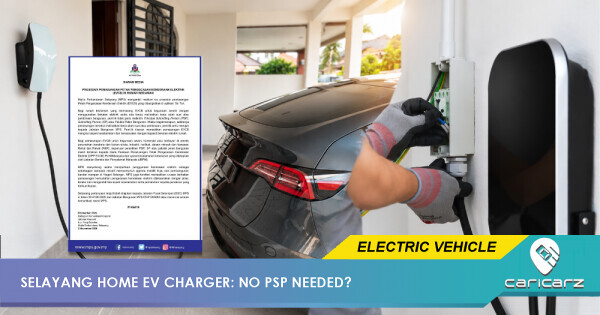
Selayang Council: No Architect Or Engineer Needed For Home EV Chargers Without Renovation
Selayang Council clarifies when home EV chargers need no PSP or SP. Find out what this means for RM15K+ cost estimates, permits and electrical safety.
02-11-2026
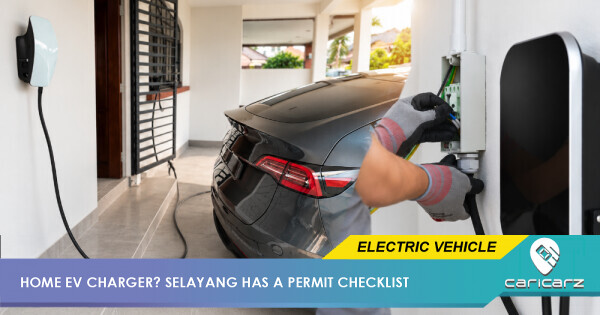
Selayang Home EV Charger Permit: Requirements, Documents And Fees (RM15k++)
Selayang's home EV charger permit checklist covers landed homes. See the RM105 council fees, required documents and reported installation costs.
30-10-2026
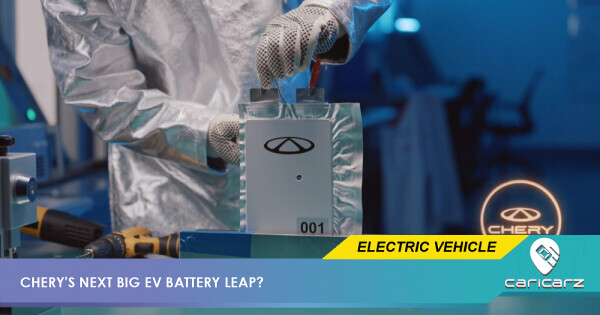
Chery Is Promising Faster Charging And Longer Range. How Soon?
Chery has revealed 12C fast-charging cells and 400 Wh/kg solid-state battery technology. Here's what its reported 2027 roadmap actually means.
21-10-2026
Show More
trending_flat
Malaysia First Used Car and EV Consignment Platform
This is the best place to sell your car at true market value. Instead of accepting low dealer trade-ins, we handle everything and connect your car directly to genuine buyers for the highest price.

Understanding CariCarzAutomall Consignment Plan


Approved 200-Check Points Inspection

7 Day Money Back Guarantee

One Year Extended Warranty

No Hidden Charge
