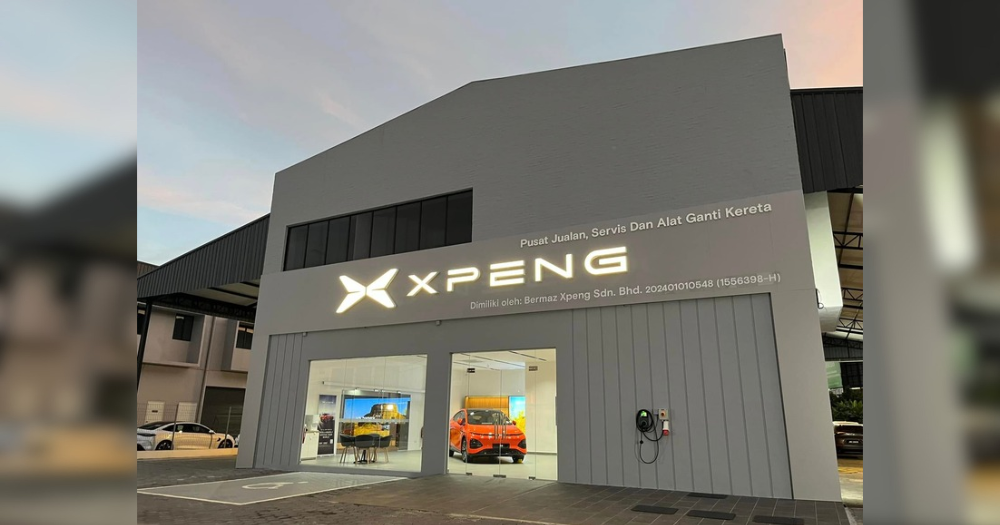
Within about a year, Bermaz Auto Bhd (BAuto) has seen three significant changes to its automotive brand portfolio.
But here's where things get interesting.
Its XPENG business recorded RM47.3 million in pre-tax profit in FY2026, nearly triple the previous year's figure.
Beyond the financial figures, could these developments offer some insight into how global automotive brands and established local distributors are adapting to Malaysia's evolving automotive landscape?
⚡ TL;DR
01
Bermaz has ceased its XPENG distributorship following the manufacturer's plans to reorganise its Malaysian distribution network, with separation terms being finalised.
02
Bermaz Xpeng recorded RM47.3 million in pre-tax profit in FY2026, making it a significant earnings contributor to the group.
03
Kia and Hyundai offer examples of how automotive manufacturers can adopt principal-led distribution models while continuing to work with established local automotive partners.
Why Has Bermaz Auto Ended Its XPENG Distributorship?
In a Bursa Malaysia filing on Nov 16, as reported by The Star, Bermaz announced that its 85%-owned subsidiary, Bermaz Xpeng Sdn Bhd, had ceased its XPENG operations with immediate effect.
The decision follows XPENG Inc's plans to reorganise its Malaysian distribution network. The distribution and warranty claim agreements between the two parties were originally scheduled to expire in March 2027.
Both parties are finalising their separation terms, with Bermaz working towards an orderly transition.
Bermaz also indicated that a further announcement would be made once the separation agreement has been signed.
Further details concerning the future distribution and after-sales arrangements are expected to become clearer as the separation process progresses.
ℹ️ What Has Bermaz Said?
Bermaz does not expect the cessation to materially affect its financial or operational performance during the current financial year.
XPENG Was A Significant Earnings Contributor For Bermaz
Despite being a relatively new automotive brand in Malaysia, XPENG had already become a meaningful contributor to Bermaz's earnings.
Sources: Bermaz Auto FY2026 annual report and RHB Investment Bank Research. Growth calculated using reported, rounded PBT figures. Subsidiary pre-tax profit is distinct from net profit attributable to Bermaz shareholders.
The improvement partly reflected the first full financial year of operations involving the XPENG G6 and X9.
Following the cessation announcement, RHB Investment Bank Research, as reported by BusinessToday, lowered its longer-term earnings forecasts for Bermaz.
RHB'S REVISED EARNINGS FORECASTS
↓ 14%
FY2028 forecast
↓ 14.6%
FY2029 forecast
BUY
RHB's investment recommendation on Bermaz remains unchanged.
These are revisions to an independent research house's earnings forecasts, not actual reported earnings declines or financial guidance issued by Bermaz. The investment rating is attributed to RHB and does not constitute an investment recommendation from Carz.
Despite the longer-term forecast reductions, RHB maintained its BUY recommendation on Bermaz, with Mazda's upcoming product pipeline seen as a potential cushion against the loss of XPENG's earnings contribution.
Indeed, Mazda remains an important strength for the group. Bermaz's latest quarterly financial results showed net profit attributable to shareholders of RM40.51 million in Q1 FY2027, up from RM8.28 million a year earlier.
Interestingly, RHB also believes XPENG could transition towards a principal-led business model in Malaysia.
While this remains an analyst's expectation rather than a confirmed development, it would not be the first time an automotive manufacturer has adopted such an approach locally.
First Kia, Then Deepal, Now XPENG
Bermaz's latest announcement follows two other significant changes to its automotive brand portfolio within about a year, as documented in its FY2026 annual report.
BERMAZ'S CHANGING BRAND PORTFOLIO
Three Brands. Three Different Developments.
NOVEMBER 2025
KIA
Kia's transition to principal-led operations in Malaysia is announced, with Kia Sales Malaysia assuming responsibility for the brand from Jan 1, 2026.
JUNE 2026
DEEPAL
The planned distribution partnership ends before commercial sales begin, following challenges in establishing a viable business model.
NOVEMBER 2026
XPENG
Bermaz Xpeng ceases operations following the manufacturer's planned distribution network reorganisation.
Context matters: Each development reflects distinct commercial and strategic circumstances, highlighting the different approaches automotive brands take in managing their Malaysian operations.
While the Deepal partnership was still at a pre-commercial stage, XPENG had already established a local presence and contributed to Bermaz's earnings.
These developments provide useful context for examining how international automotive brands establish and manage their Malaysian operations.
How Malaysia's evolving EV regulations are changing the business case for new automotive brands.
Is Malaysia's Car Distribution Model Changing?
As Carz previously reported, Kia Sales Malaysia assumed responsibility for the brand's Malaysian operations on Jan 1, 2026, adopting a principal-led business model.
Importantly, Kia also acknowledged Bermaz's contributions during their four-year collaboration and its role in facilitating the handover.
So, what exactly is the difference between these two business models?
AUTOMOTIVE DISTRIBUTION EXPLAINED
Two Different Distribution Models
INDEPENDENT DISTRIBUTOR
Car Manufacturer
↓
Independent Local Distributor
↓
Dealers & Service Centres
↓
Car Buyer
Potential Advantages
✓Local market expertise
✓Access to established local infrastructure
✓Established dealer relationships
PRINCIPAL-LED MODEL
Car Manufacturer
↓
Manufacturer-Owned Local Entity
↓
Dealers & Service Centres
↓
Car Buyer
Potential Advantages
✓Greater brand control
✓Direct HQ coordination
✓Closer alignment with global strategy
The key difference? In a principal-led model, the manufacturer takes direct responsibility for managing the brand in Malaysia, while an independent distributor manages local operations on the manufacturer's behalf. Both models can involve partnerships with local automotive companies.
Illustrative comparison of two common automotive distribution models. Actual ownership structures, responsibilities, dealer arrangements and commercial agreements vary by manufacturer and market.
While a principal-led model may give manufacturers greater control over local operations, it also requires them to assume greater responsibility for investment and operational performance.
Independent distributors, on the other hand, can offer established infrastructure and market expertise that would otherwise require considerable time and resources to develop.
Why Local Automotive Partners Still Matter
Entering a new automotive market requires far more than competitively priced cars. It also means establishing dealerships, training technicians and developing after-sales infrastructure.
Established companies such as Bermaz bring valuable resources and local market expertise to this process.
Bermaz's XPENG network as of April 2026 offers a useful example of the infrastructure developed by a local distributor.
Interestingly, adopting a principal-led business model can create different opportunities for collaboration with established local automotive partners.
INDUSTRY CASE STUDIES
Principal-Led Doesn't Mean Going It Alone
Hyundai + Sime Motors
Following Hyundai's transition to principal-led operations, Sime Motors continued to play a role through authorised dealerships and vehicle assembly operations via Inokom.
Kia + Cycle & Carriage
Kia's Glenmarie 3S centre, operated by Cycle & Carriage, demonstrates how established local automotive partners can continue supporting manufacturer-led operations.
~40,000
Sq ft of facility space
20
Service bays
These examples illustrate how established automotive companies can continue contributing through dealerships, servicing and vehicle assembly, even when manufacturers assume greater responsibility for distribution.
What's Next For XPENG In Malaysia?
While XPENG's future distribution arrangements remain to be clarified, the manufacturer has already established a local presence beyond its distributorship partnership with Bermaz.
XPENG has its own Malaysian team and a local assembly partnership with EP Manufacturing Bhd (EPMB), with its first locally assembled G6 rolling off the production line in Melaka in June 2026.
The manufacturer has also previously outlined several expansion targets for its Malaysian operations leading into 2028.
XPENG MALAYSIA
Previously Announced 2028 Targets
🏢
30
3S outlets
🔋
3
Battery repair centres
⚡
80+
XPENG charging stations
📦
99%
Spare parts supply target
Timeline: These targets were announced in June 2026, ahead of the latest distribution restructuring. Further announcements will provide a clearer picture of XPENG's future Malaysian operations.
Source: XPENG's previously announced Malaysian expansion plans, as detailed in Paul Tan's report.
XPENG's local manufacturing partnership also highlights the role of Malaysian automotive companies in supporting international manufacturers' localisation efforts.
Understanding Malaysia's potential role in XPENG's regional manufacturing ambitions.
An Evolving Role For Local Automotive Partners?
The experiences of Kia and Hyundai offer an interesting perspective on how collaboration between global car manufacturers and established Malaysian automotive companies can evolve under different distribution models.
While some manufacturers are assuming greater responsibility for their local operations, Malaysia's established automotive companies continue to offer expertise across vehicle distribution, retail, servicing and manufacturing.
Whether XPENG will adopt a similar approach remains to be confirmed. For now, these examples demonstrate the different ways manufacturers and local automotive partners can work together.
THE BIGGER PICTURE
Different Models. Continued Collaboration.
As Malaysia's automotive industry evolves, the expertise, infrastructure and established networks of local automotive companies remain valuable across different business models.
Perhaps the next chapter of Malaysia's automotive distribution landscape will be shaped not only by how manufacturers choose to distribute their vehicles, but also by the different ways they collaborate with established local automotive partners.
YOUR QUESTIONS ANSWERED
BERMAZ AUTO & XPENG MALAYSIA FAQ
Why has Bermaz Auto ended its XPENG distributorship?
The cessation follows XPENG Inc's plans to reorganise its Malaysian distribution network. Bermaz announced the cessation on Nov 16, 2026, with separation terms being finalised. A further announcement is expected once the separation agreement has been signed.
How much profit did Bermaz's XPENG business record?
According to Bermaz Auto's FY2026 annual report, Bermaz Xpeng recorded RM47.3 million in profit before tax, compared with RM16.2 million in FY2025. This represents year-on-year growth of approximately 192%.
Who is XPENG's new distributor in Malaysia?
As of Nov 17, 2026, XPENG's future Malaysian distribution structure had not been officially established in the announcements reviewed. RHB Research believes XPENG could transition towards principal-led operations, although this remains an analyst's expectation rather than official confirmation.
What is a principal-led automotive distribution model?
A principal-led distribution model involves a car manufacturer managing its local operations directly, typically through its own subsidiary. The manufacturer may continue collaborating with independent dealerships, service providers and vehicle assembly partners.
Which car brands have adopted principal-led operations in Malaysia?
Hyundai and Kia are recent examples. Hyundai Motor Malaysia adopted principal-led operations in June 2025, while Kia Sales Malaysia assumed responsibility for Kia's Malaysian operations on Jan 1, 2026.
Does XPENG assemble cars in Malaysia?
XPENG established a local manufacturing partnership with EP Manufacturing Bhd (EPMB), with its first locally assembled G6 rolling off the production line in Melaka in June 2026.
A Bachelor of English Language and Literature graduate with an obsession for the finer details. Sofea uses her background in translation to decode the technicalities of automotive innovation. She is dedicated to delivering impactful, meticulously researched articles that provide a narrative far beyond the spec sheet. LinkedIn: https://bit.ly/3C018vv
Bermaz Auto has scrapped its Deepal deal. With new July 1st MITI rules now in effect, is the era of affordable imported EVs in Malaysia officially over?
Malaysia is studying an EV levy to fund more public chargers. Explore the proposal, infrastructure challenges, Budget 2027 incentives and EV affordability.
Malaysia First Used Car and EV Consignment Platform
This is the best place to sell your car at true market value. Instead of accepting low dealer trade-ins, we handle everything and connect your car directly to genuine buyers for the highest price.
Understanding CariCarzAutomall Consignment Plan
Approved 200-Check Points Inspection
7 Day Money Back Guarantee
One Year Extended Warranty
No Hidden Charge
About Us
CarzAutoMedia: Stay connected to the latest car news! Get instant updates on new releases, industry trends, and automotive innovations. Your go-to source for 24/7 coverage of everything automotive.