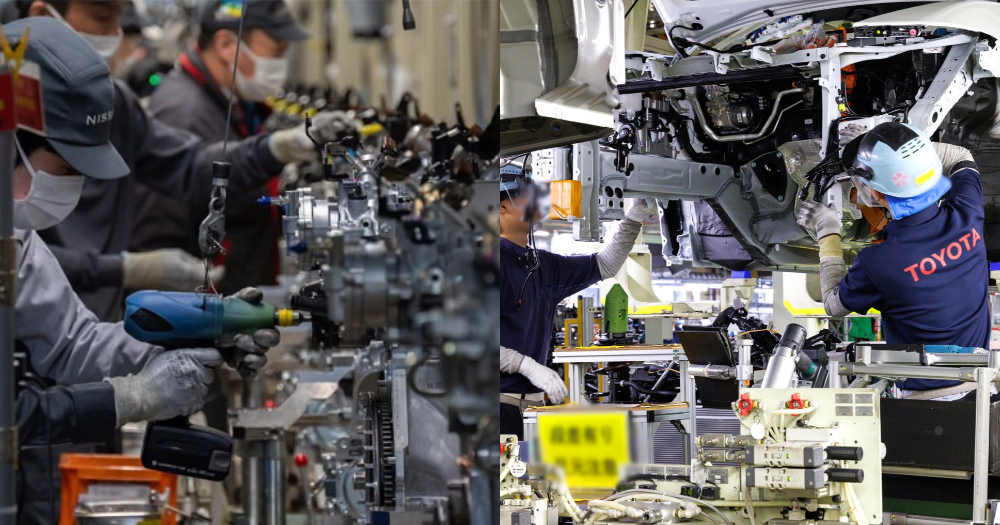
China can reportedly develop some new cars in under two years. Japanese manufacturers? Typically four to five. Now, Toyota, Honda, Nissan, Suzuki and Mitsubishi are racing to close that gap, with some targeting development-time reductions of up to 50%.
But can Japan's automotive giants move faster without compromising the engineering quality and reliability they're known for?
⚡ TL;DR: WHAT YOU NEED TO KNOW
The Speed Gap:
Japanese manufacturers typically take four to five years to develop new cars, versus under two years for some Chinese rivals.
Japan's Response:
Nissan targets up to 40% faster development for derivative models, while Honda's Triple Half programme aims to halve development time, cost and workload.
Quality Matters:
Shared platforms and digital engineering can reduce duplicated work, but essential safety and durability validation must remain.
Malaysian Impact:
Faster model updates and newer technology are possible longer-term benefits.
THE DEVELOPMENT SPEED GAP
JAPAN
4-5 Years
Typical development
CHINA
Under 2
Years, reported faster cycles
Source: Bernama-Kyodo, 25 October 2026. Broad reported comparisons, not fixed timelines for every model.
Nissan Targets 40% Faster Car Development
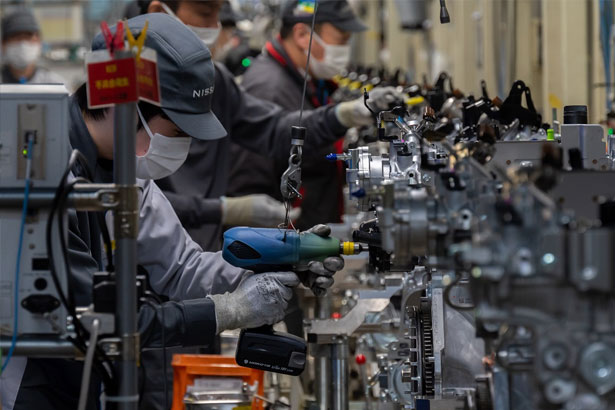
Nissan is taking an ambitious approach with its new family-based vehicle development strategy, which involves sharing common platforms across multiple vehicles of similar sizes.
According to Bernama-Kyodo, Nissan aims to develop a new SUV for North America in approximately three years and one month, ahead of its targeted 2028 launch.
Nissan Yokohama Plant
Subsequent models sharing that platform could take just two and a half years, representing a development-time reduction of up to 40%.
The strategy is expected to cover around 80% of Nissan's global sales, with the number of different component types potentially reduced by about 70%. Essentially, Nissan wants to stop developing similar engineering foundations repeatedly.
There's an important distinction, though. The 40% target applies to derivative models sharing an established platform, not necessarily every completely new Nissan.
Honda's Triple Half Strategy: 50% Less Time, Cost And Workload
Honda has its own ambitious answer: Triple Half, a strategy targeting a 50% reduction in development time, cost and engineering workload compared with 2025 levels.
HONDA'S TRIPLE HALF TARGETS
-50%
Time
-50%
Cost
-50%
Workload
Targets compared with 2025 levels. Implementation timelines vary by development programme.
Honda plans to rely more on AI, digital engineering and streamlined processes. Its official business briefing sets out different implementation timelines: minor model changes beginning in fiscal 2026 and full model-change projects starting in 2028.
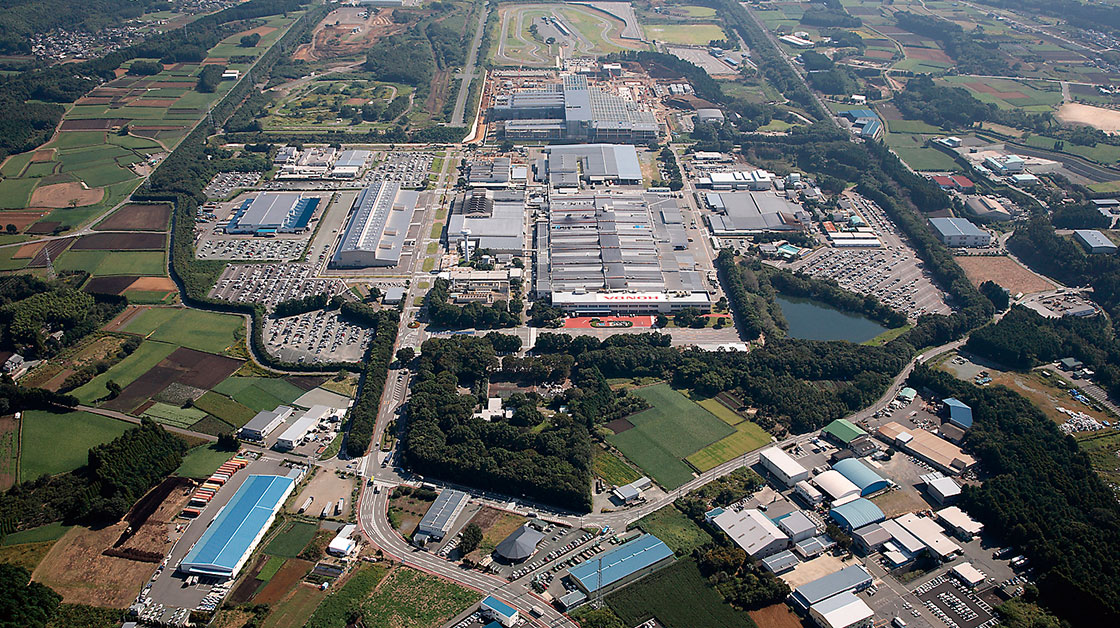
Honda Kumamoto Factory
Honda and Nissan are also exploring efficiency through cooperation. In August 2026, the two manufacturers announced a joint development agreement to standardise selected electronic control units and software, with planned application from fiscal 2029.
Toyota, Suzuki And Mitsubishi Are Also Speeding Things Up
Toyota, meanwhile, is tackling inefficiencies through its AREA35 initiative, which aims to reduce unnecessary component variations and free up factory space. By simplifying parts and specifications, Toyota hopes to improve production capacity and development efficiency. Early trials at 10 Japanese plants reportedly freed up capacity for an additional 80,000 vehicles annually, alongside development resources equivalent to three full model-change projects.
Suzuki wants to shorten its development cycle to around two years, while Mitsubishi is targeting a 20% reduction to approximately three years by 2030.
HOW JAPAN'S CARMAKERS ARE RESPONDING
Nissan
Up to 40% faster development for derivative models
Honda
Triple Half targets across time, cost and workload
Toyota
Parts simplification and production efficiency
Suzuki
Target of approximately two years
Mitsubishi
Target of around three years by 2030
Can Faster Car Development Affect Quality And Reliability?
This is where things get interesting. Japanese carmakers have spent decades building reputations around engineering quality, durability and reliability. So, when they start talking about cutting development times by 40% or even half, it's fair to ask whether something has to give.
Developing a new vehicle involves crashworthiness, durability, powertrain testing, electronic systems and software validation. These aren't processes that manufacturers can simply ignore in the race to launch faster.
Faster Development Doesn't Have To Mean Less Testing
Shared platforms and digital simulations can help eliminate duplicated engineering work. The challenge is ensuring that safety, durability and software validation remain thorough.
His comments offer another perspective on the competition. Development speed is only one measure of automotive competitiveness. Engineering depth, manufacturing consistency and long-term quality matter too.
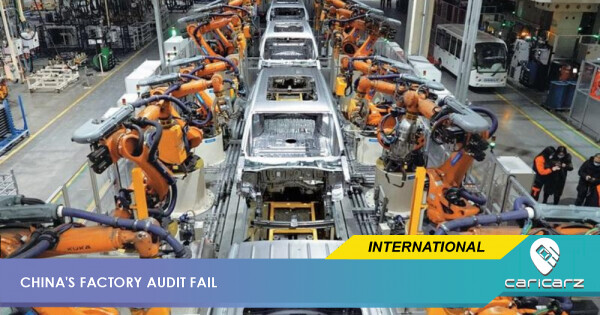
A closer look at the manufacturing and compliance issues identified during China's automotive factory inspections.
What Does This Mean For Malaysian Car Buyers?
For Malaysians, the potential benefits are easy to understand: more frequent model updates, newer technologies and stronger competition, particularly as Chinese brands continue expanding their local presence.
Japanese manufacturers could eventually respond more quickly to changing expectations around hybrid technology, connectivity, equipment and driver assistance features.
However, faster global development doesn't automatically mean earlier Malaysian launches. Local introductions still depend on production arrangements, market demand, homologation and distributor decisions.
And while more choices are welcome, Malaysian motorists still need vehicles that can withstand daily traffic, long-distance journeys and years of ownership, backed by dependable after-sales support.
The Real Winner Could Be The Buyer
China has changed the pace of automotive development, and Japan is adapting. But launching a car faster is only half the challenge. Making sure it remains safe, dependable and competitive is what matters long after the showroom excitement fades.
For Malaysian buyers, the ideal outcome is simple: newer technology and more choice, without sacrificing reliability.
Frequently Asked Questions
How long does it take to develop a new car in Japan compared with China?
According to the Bernama-Kyodo report, Japanese manufacturers typically take around four to five years, while some Chinese manufacturers reportedly complete development in under two years. Timelines vary by vehicle and programme.
How is Nissan planning to develop cars faster?
Nissan plans to share platforms and components across families of vehicles. It is targeting up to 40% shorter development times for subsequent models using established platforms.
What is Honda's Triple Half strategy?
Triple Half is Honda's initiative to reduce vehicle development time, costs and engineering workloads by 50% against 2025 levels, using digital engineering, AI and process improvements.
Does faster car development mean lower quality?
Not necessarily. Shared platforms and digital tools can reduce duplicated work, but manufacturers still need effective safety, durability and software validation. Actual quality depends on how development and testing are managed.
Will Japanese cars launch faster in Malaysia?
Possibly in the longer term, but no accelerated Malaysian launch schedules have been confirmed through these development initiatives. Local launches depend on market demand, production, regulatory approvals and distributor strategies.
A Bachelor of English Language and Literature graduate with an obsession for the finer details. Sofea uses her background in translation to decode the technicalities of automotive innovation. She is dedicated to delivering impactful, meticulously researched articles that provide a narrative far beyond the spec sheet. LinkedIn: https://bit.ly/3C018vv
Mercedes-Benz warns one German assembly plant and one powertrain plant could close if costs aren't reduced, as domestic production struggles to compete.
The world called it 'ugly,' but China’s elites snapped up every Ferrari Luce in seconds. Discover the truth behind the 'hated' EV and the number 88 mystery.
Malaysia First Used Car and EV Consignment Platform
This is the best place to sell your car at true market value. Instead of accepting low dealer trade-ins, we handle everything and connect your car directly to genuine buyers for the highest price.
Understanding CariCarzAutomall Consignment Plan
Approved 200-Check Points Inspection
7 Day Money Back Guarantee
One Year Extended Warranty
No Hidden Charge
About Us
CarzAutoMedia: Stay connected to the latest car news! Get instant updates on new releases, industry trends, and automotive innovations. Your go-to source for 24/7 coverage of everything automotive.