- News
- Auto News
- 7 Countries With Pricier Petrol Than Malaysia (Even Oil-Rich Ones!)


The global energy market has been giving pure chaos lately. Between major supply chain drama in West Asia and shipping bottlenecks, fuel prices worldwide have been on a wild rollercoaster. Yet, if you’re filling up your tank in Malaysia, you’re still paying a locked-in RM1.99 per litre for subsidized RON95.
INSULATED FROM THE VOLATILITY
This isn't an accident. It’s the result of the government’s targeted BUDI MADANI (BUDI95) subsidy framework, which is designed to keep our pump prices insulated from international market shocks.During a recent session in the Dewan Rakyat, Prime Minister Datuk Seri Anwar Ibrahim dropped some heavy context on how good we actually have it compared to the global average.
"Fuel prices in Malaysia are lower than those in Qatar and Saudi Arabia, that is a fact that must be remembered," Anwar highlighted. He pointed out that while petro-states like Saudi Arabia have seen retail rates climb past RM2.40 per litre, Malaysia's safety net is holding strong at RM1.99 for eligible everyday drivers.
The Receipts: Global Petrol Price Comparison
To show you exactly how massive this difference is, here is how Malaysia stacks up against global cities and major economies. Here are the numbers converted into Ringgit:
| Country | Local Price (per Litre) | USD Equivalent | Approx. Price (MYR) |
|---|---|---|---|
| 🇭🇰 Hong Kong | HKD 31.84 | USD 4.06 | RM 17.86 |
| 🇸🇬 Singapore | SGD 3.95 | USD 3.00 | RM 13.20 |
| 🇩🇪 Germany | EUR 2.01 | USD 2.29 | RM 10.08 |
| 🇫🇷 France | EUR 1.87 | USD 2.14 | RM 9.42 |
| 🇳🇴 Norway | NOK 20.93 | USD 2.14 | RM 9.42 |
| 🇬🇧 United Kingdom | GBP 1.50 | USD 2.00 | RM 8.80 |
| 🇸🇦 Saudi Arabia | SAR 2.33 | USD 0.62 | RM 2.73 |
| 🇲🇾 Malaysia (Subsidized RON95) | MYR 1.99 | USD 0.45 | RM 1.99 |
Why is Petrol So Expensive Everywhere Else?
1. High Taxes = High Pump Prices
In places like Europe (Germany, France, UK) and land-scarce hubs like Singapore, governments deliberately slap massive taxes and environmental levies on fuel. They do this to fund top-tier public transport infrastructure and actively discourage people from driving gas-guzzling cars.
2. The "Oil Producer" Advantage is Changing
Historically, living in an oil-rich nation meant fuel was practically free, but modern economic realities have forced even massive exporters to change their strategy. High-profile international reports from the International Monetary Fund (IMF) and the World Bank document how major exporters across the Middle East, including Saudi Arabia, Qatar, and the UAE, have systematically rolled back domestic fuel subsidies to balance their national budgets, stabilize volatile domestic spending, and protect fiscal health.
GEOPOLITICAL STRAIN ON EXPORTS
These domestic policy shifts have become even more urgent in the face of intense geopolitical friction. Frequent disruptions near critical shipping lanes like the Strait of Hormuz directly choke off export volumes, leaving governments with massive revenue deficits and no choice but to trim domestic perks to keep their budgets sustainable.
3. Malaysia's Secret Sauce: Targeted Subsidies
So, how is Malaysia holding the line at RM1.99? The government shifted from "blanket subsidies" (where literally everyone, including wealthy tourists and luxury cars, got cheap gas) to the BUDI MADANI system.
By using targeted cash assistance and digital checks via MyKad, the government filters out smuggling and ensures the financial help goes directly to the local citizens who actually need it. With the state allocating close to RM40 billion for fuel subsidies this year alone, it represents a massive fiscal shield protecting local wallets from global inflation.
Disclaimer: Global pricing metrics are sourced directly from the GlobalPetrolPrices Country Database. Rates reflect verified retail benchmarks. Local currency conversions shift slightly based on global forex markets. Pump prices change frequently based on crude refining costs, international logistics, and national tax updates
Tagged:
Written By
Sofea Najmi
A Bachelor of English Language and Literature graduate with an obsession for the finer details. Sofea uses her background in translation to decode the technicalities of automotive innovation. She is dedicated to delivering impactful, meticulously researched articles that provide a narrative far beyond the spec sheet. LinkedIn: https://bit.ly/3C018vv
Related News

RM1.50 Petrol Is Off The Table – PM Anwar Finally Responds To Netizens
PM Anwar responds to calls for RM1.50 petrol, explaining why fuel prices won't drop further as Malaysia spends RM40 billion yearly on subsidies.
21-07-2026
Latest News
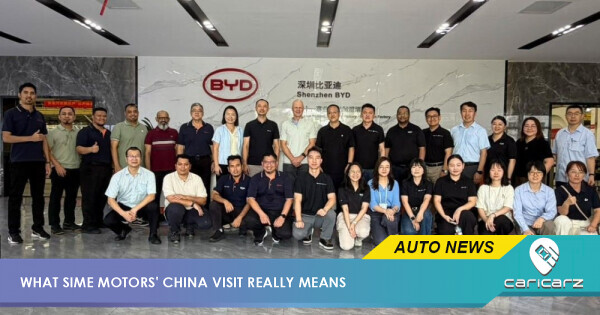
Will "Made-in-Malaysia" BYD EVs Become A Reality Soon?
Discover what Sime Motors' Shenzhen trip signals for local assembly (CKD) in Malaysia.
04-09-2026

Kids Spotted Sitting on Moving Alphard Roof in Ipoh: Police Launch Investigation Under Child Act
Ipoh police are tracking a Toyota Alphard driver after a viral video showed two kids sitting on the roof via the sunroof.
03-09-2026
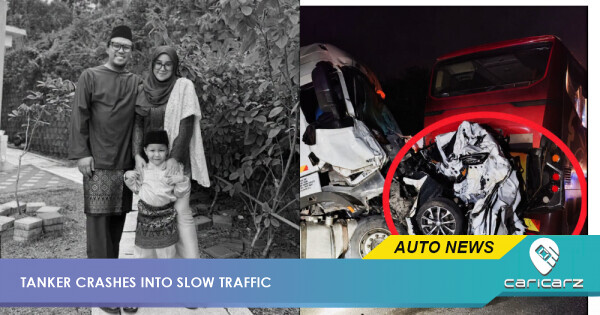
"Traffic Was Slow Before The Tanker Struck": Horrific 11-Vehicle LPT1 Crash Claims 4 Lives Near Temerloh
Four people, including Kuantan’s Secangkir Cafe founders and their 4-year-old son, were killed after an out-of-control cement tanker triggered an 11-vehicle crash on LPT1 near Temerloh. Read the latest police updates.
01-09-2026

Perodua's Supplier Just Dropped A Huge RM54Mil Clue About A Secret New Model Launching In 2027
Perodua supplier MCE Holdings drops an RM54M clue about a secret 2027 model. Read about the upcoming next-gen Myvi, Bezza facelift, and local ADAS tech.
27-08-2026

Proton Almost Built A RM150,000 Mid-Engined Sports Car Using Lotus Tech & Wira Parts
Did you know Proton almost built a RM150k mid-engined sports car? Discover how 'Project Sepang' combined Lotus engineering, Wira parts, and Petronas tech.
26-08-2026

RM1,000 Trade-In Subsidy For Old Motorcycles: Transport Ministry Considers New Scheme
Got an old motor? MOT is considering a RM1,000 trade-in subsidy to help Malaysian riders upgrade to new CKD bikes. Here is how the proposed scheme works.
26-08-2026
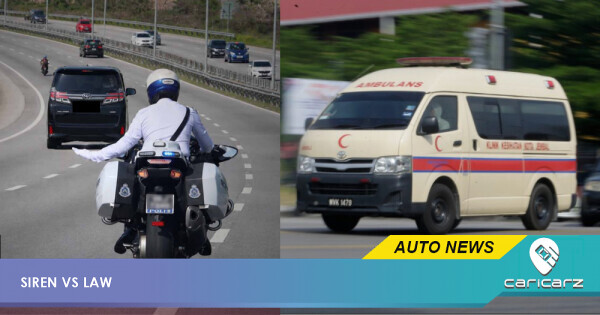
Do You REALLY Have To Give Way To Every Siren? What Experts Say About VIP Convoys vs. Emergencies
Do you legally have to give way to VIP convoys in Malaysia? Here is what traffic laws and safety experts say about sirens, outriders, and RM10k fines.
26-08-2026
