Singapore Uni Lab Will Build Fast-Charging EV Batteries That Can Last 30 Years


National University of Singapore (NUS) facility is developing batteries that will allow an electric vehicle (EV) to be fully charged in the time it takes to fill up at a petrol station.
These batteries, made of the metal niobium, are expected to last a full decade longer than those currently powering EVs, and may even outlast the vehicle itself.
The fast-charging batteries are one of the key projects of a new S$5 million (RM23.06 million) battery innovation NUS facility, which was officially opened on May 22 and is supported by the National Research Foundation.
It marks NUS' entry into the race to develop the next-generation of batteries, which are currently in short supply due to an electrical energy boom.
The lab was established in collaboration with CBMM, the world's leading supplier of niobium, to develop fast-charging batteries with a 30-year lifespan.

According to Professor Antonio H. Castro Neto, director of NUS' Centre for Advanced 2D Materials (CA2DM), the facility allows developers to build and test all parts of their battery prototype in one location rather than going around to multiple manufacturers to develop each battery part.
The centre is home to the new facility – the CBMM-CA2DM Advanced Battery Laboratory.
Battery testers can use a variety of tools, including a furnace to grow new materials and X-ray scanners to study the properties of elements used.
The lab also has a dry room (where humidity is kept at 1%), a no-oxygen chamber for battery testing, and a fire-proof room where prototypes can be tested safely.
"The project is very much a pilot line for battery production," Prof Castro Neto explained.
"It's not a large-volume facility like a gigafactory; the idea is to produce enough batteries for third-party makers to test, get a first look at, and get (them) approved for market use."
According to Prof Castro Neto, the facility is open to approved battery makers and enterprises interested in developing next-generation batteries.
He also stated that each project will be reviewed by a panel of scientists who must be convinced that the project is truly innovative rather than simply providing an incremental improvement to existing batteries.

According to CBMM global head of batteries Rogerio Ribas, the centre is starting with niobium-graphene batteries, which combine niobium's resistant molecular structure with graphene's electrical conductivity.
CBMM has sold niobium over the last four years to improve the durability of batteries used in electronics such as electric scooters and power tools, according to Ribas.
The company's current goal is to make the technology more convenient and long-lasting, with a niobium-graphene battery prototype scheduled for production in 2024.
According to Ribas, the structure of niobium is more resistant to stress while the battery is charging, which extends the battery's lifespan and prevents it from overheating.
He claims that once ready, niobium-built batteries can be charged at least 10,000 times while retaining approximately 80% of their starting capacity. This projection is up to five times greater than what standard EV batteries can currently achieve.

The company's goal is to create car batteries that can charge completely in 10 minutes - roughly three times faster than the most recent fast-charging cells found in EVs today - while remaining durable and safe to use.
Ribas added that it remains to be seen how long each charge on a niobium-built battery will last, but fast-charging capabilities will allow smaller battery packs to serve more vehicles.
These batteries are among several next-generation cells under consideration to provide a more sustainable alternative to the production of lithium-ion batteries, which emit toxic waste when discarded.
Scientists at Nanyang Technological University (NTU) are toasting waste paper into carbon blocks for battery parts. Another NTU project is pioneering the use of fruit peels to assist in the breakdown of used batteries. NUS is also developing a solid-state battery that does not contain any flammable liquids.
Gallery


Tagged:
Written By
Anis
Previously in banking and e commerce before she realized nothing makes her happier than a revving engine and gleaming tyres........


JPJ Running Numbers
KUALA LUMPUR
VRQ1098
SELANGOR
BST6859
JOHOR
JE2496J
PULAU PINANG
PSF5417
PERAK
APL4629
PAHANG
CFH7313
KEDAH
KGJ1097
NEGERI SEMBILAN
NEL8375
KOTA KINABALU
SJU1209
KUCHING
QAB5611P
Last updated 17 Sep, 2026
Fuel Price
Petrol
RON 95
RM 3.97
+1.38
RON 97
RM 4.90
+1.75
RON 100
RM 7.20
+2.20
VPR
RM 8.23
+2.00
Diesel
EURO 5 B10
RM 5.12
+2.08
EURO 5 B7
RM 5.32
+2.08
Last updated 30 Apr, 2026
Related News

Are EVs Much More Affordable Now Than A Decade Ago?
Are EVs much more affordable now versus a decade ago? The answer is YES, and here’s why…

05-01-2026

Mercedes-Benz And Factorial Collaborates To Develop Solid-State Batteries
Mercedes-Benz teams up with American startup Factorial to develop solid-state batteries that promises to extend EV range by 80%.
15-09-2024

BMW Prepares Mexico Plant For Neue Klasse Models Production
BMW Group begins construction to expand its Mexico plant, which will also build Neue Klasse models.
09-05-2024

Rimac Set To Supply BMW With EV Batteries
New “long-term” deal sees Rimac supplying EV batteries for next-generation BMW EV models.
11-04-2024

Stellantis Aims To Halve EV Battery Weight And Match ICE and EV Weights
Stellantis seeks to match EV weight with ICE cars by halving battery weight through efficient packaging and more.
12-09-2023

Battery Chemists Recommend Fluoride To Make Electric Cars Go Farther
Discovery Of Fluoride Could Lead To Much Longer-Lasting EV Batteries.
02-07-2023
Latest News
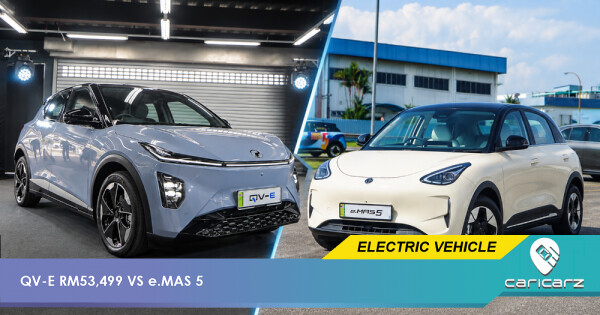
Perodua QV-E Now At RM53,499 Vs Proton e.MAS 5: Which Makes More Sense?
Perodua QV-E now starts at RM53,499 with BaaS under its Malaysia Day promo. See how it compares with the Proton e.MAS 5 on price, range, charging and features.

16-09-2026
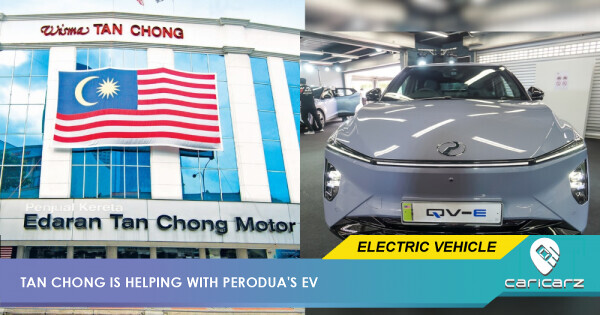
Yes, Tan Chong Is Involved In Perodua's EV. Here's What It's Actually Doing
Tan Chong has signed a three-year agreement to support Perodua's EV production with ED coating, painting and assembly-line services.
15-09-2026

BYD Has A New Plan For Malaysian-Made Cars, And It's Not Tanjung Malim
BYD has dropped its Tanjung Malim plant plan but says Malaysian CKD remains on track, with talks with an unnamed local partner at an advanced stage.
11-09-2026

Malaysia's EVs Are Growing Fast. The Chargers? Not So Much
Malaysia's EV registrations are surging, with 122,286 registered by July 2026. But can the country's 6,416 public EV chargers keep up?
10-09-2026

Could The Proton e.MAS 7 PHEV Get 230 KM EV Range And AWD Next? Its China Twin Says Maybe
The Proton e.MAS 7 PHEV's Geely twin is getting a larger 40.06 kWh battery, around 230 KM WLTP EV range and AWD. Could Malaysia get them too?
10-09-2026
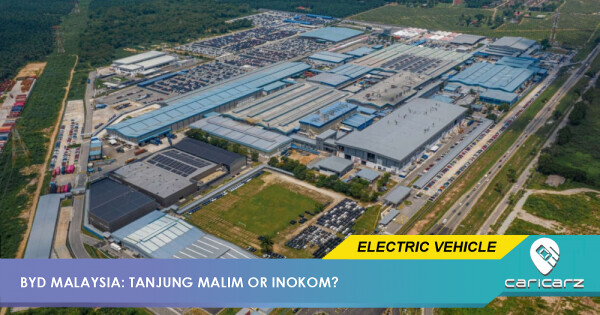
BYD Malaysia's Next Move Is Coming – Tanjung Malim Or Inokom?
BYD says its next Malaysia move will be revealed within a week. Could its EVs be assembled at Tanjung Malim or Sime Motors' Inokom plant in Kulim?
07-09-2026
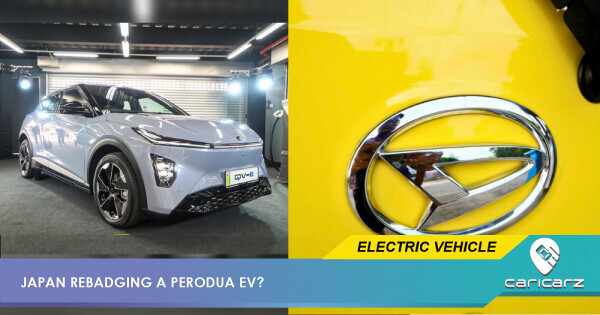
Japan Rebadging A Malaysian EV? How Daihatsu Could Use Perodua’s QV-E Platform
Will Daihatsu rebadge Perodua’s QV-E? Inside the historic MITI talks as Japan looks to adopt Malaysia's homegrown EV platform technology.
02-09-2026
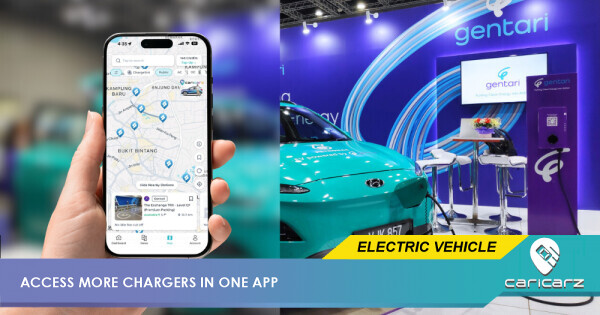
One App, More Chargers: ChargeSini and Gentari Roaming Goes Live
Access Gentari EV chargers directly on the ChargeSini app. Discover roaming integration features, real-time bay availability, and seamless payments in one place.
02-09-2026
Show More
trending_flat