Resignation Chaos: PADU, Govt. EV Transition in Limbo?

-full_normal.jpg)
The resignations of Economy Minister Rafizi Ramli and Natural Resources and Environmental Sustainability Minister Nik Nazmi Nik Ahmad are more than just a political shake-up. They bring into question the future of key national agendas under their watch.
Rafizi was behind the Pangkalan Data Utama (PADU), a RM85 million central database designed to help the government target subsidies more accurately. PADU was meant to determine who qualifies for fuel, electricity, and other government aid. It was a cornerstone in the effort to reduce blanket subsidies.


Now, with Rafizi stepping down, what becomes of PADU? Will the incoming minister prioritise the system, or let it fade into the background? Prime Minister Anwar Ibrahim has already announced that RON95 prices will remain unchanged for Malaysians.
But he also said the government is exploring ways to ensure subsidies go only to Malaysians - including the possibility of requiring a MyKad for petrol purchases.
Is PADU still central to that plan? Or will the government take a different route entirely?

Nik Nazmi’s resignation meanwhile puts a spotlight on another major government commitment - the transition to electric vehicles (EVs). His ministry had just begun rolling out EV adoption guidelines for the federal fleet. The guidelines outlined everything from fleet assessments to charger infrastructure to carbon reduction targets.
Without him, will the transition continue with the same urgency? Or will a new minister bring a new direction? These aren’t just policy questions — they are questions of leadership, continuity, and momentum.

Analysts are now openly calling for a Cabinet reshuffle. With key ministers gone and possibly more to follow, it may be inevitable. But with a reshuffle comes uncertainty.
Will new ministers stay the course or change priorities? Will they support the work already done, or start over with their own agendas? The cost of lost time and resources could be significant if the direction changes mid-stream.
Additionally, Investment, Trade and Industry Minister Tengku Zafrul’s term ends in Dec. His role in Malaysia’s industrial EV strategy is crucial. Auto brands like Honda and XPeng have been vocal and already made it clear: without long-term policy guarantees, they will not commit to local production.
-full-full_normal.jpg)
The current tax exemption for EV assembly only lasts until 2027. That’s not enough time for automakers to break even on their investments. They’re asking for clarity beyond 2027 - ideally, for another five to ten years.
Without it, Malaysia may lose out to regional competitors like Thailand and Indonesia, who are already moving forward with clear, long-term roadmaps.
All the above also indirectly affects Malaysia’s EV infrastructure goals. The government promised 10,000 public EV chargers by the end of 2025. So far, only about 3,600 have been installed by charge point operators (CPOs). Progress has slowed.

Industry players cite a lack of clear support and policy continuity. With the resignations and the uncertain future of the National Electric Vehicle Steering Committee, who will drive the next phase of this rollout?
All of this points to a larger question: who is steering the ship now? And in what direction?
This is a moment of reckoning for the MADANI government. It’s time to stop relying on short-term incentives and vague announcements. The country needs clear plans, firm leadership, and long-term commitment.
PADU, EVs, government fleet and investor confidence - all are at a crossroads. Continuity matters. Direction matters. The Prime Minister must now ensure that the course remains steady, no matter who holds the wheel.
Malaysia cannot afford more drift. The clock is ticking.
Written By
Kumeran Sagathevan
More then half his life spend being obsessed with all thing go-fast, performance and automotive only to find out he's actually Captain Slow behind the wheels...oh well!


JPJ Running Numbers
KUALA LUMPUR
VRV5240
SELANGOR
BSU6024
JOHOR
JG3653J
PULAU PINANG
PSG7516
PERAK
APM4761
PAHANG
CFJ2257
KEDAH
KGJ5767
NEGERI SEMBILAN
NEM3903
KOTA KINABALU
SJU6851
KUCHING
QAB8253P
Last updated 25 Oct, 2026
Fuel Price
Petrol
RON 95
RM 3.97
+1.38
RON 97
RM 4.90
+1.75
RON 100
RM 7.20
+2.20
VPR
RM 8.23
+2.00
Diesel
EURO 5 B10
RM 5.12
+2.08
EURO 5 B7
RM 5.32
+2.08
Last updated 30 Apr, 2026
Related News

Rafizi: PADU Ready but Overlooked for RON95 Subsidy Rationalisation
Finance Ministry sidelines PADU, opts for a different approach in RON95 subsidy rationalisation.
07-07-2025

T15 Classification Discussed Four Times, No Final Decision Yet
T15 classification, presented to discussed by the Cabinet four times, remains under review.
20-03-2025

Targeted RON95 Subsidy Will Be Implemented via Two-Tier Pricing – Rafizi
The government said the targeted RON95 petrol subsidy will be implemented via a two-tiered pricing mechanism.

07-11-2024

Recycling: Malaysia’s EV Ecosystem Beyond Charging Station
While EV sales surge, the country is still playing catch-up on policies to manage the looming wave of battery waste.
03-06-2025

Almost 2,400 Wild Animals Killed On Malaysian Roads Since 2020
From 2020 to 2024, Malaysian road accidents killed 2,361 wild animals according to Nik Nazmi Nik Ahmad.
13-05-2025

RON95 Subsidy: Green Goals vs. Political Risks
Malaysia’s RON95 subsidy reforms: Balancing environmental goals and public backlash.
13-01-2025

Nik Nazmi: EV Transition for Govt Vehicles Begins Next Year
NRES Minister unveils guidelines to electrify government vehicles in stages starting 2025.
18-12-2024

Proton e.MAS 7 Leads ASEAN Meeting, Luxury EVs for Officials
Proton e.MAS 7 to serve as official EV for ASEAN Meeting, with premium EVs for high-ranking delegates
18-12-2024
Latest News
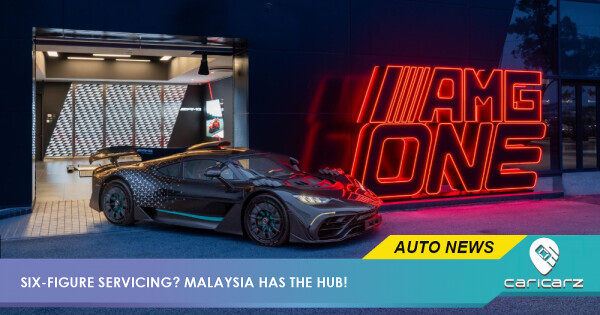
Mercedes-AMG ONE Servicing Can Cost Six Figures. Malaysia Now Has A Dedicated Hub
Mercedes-AMG ONE servicing can cost six figures. Discover why Malaysia's new RM2.2 million service hub is a major milestone for the rare hypercar.

23-10-2026

Loke Says Transport Data Is Open. So Why Is Journey Planning Still A Headache?
Anthony Loke urges local developers to use Malaysia's open public transport data. But gaps in live bus and rail information remain.
23-10-2026
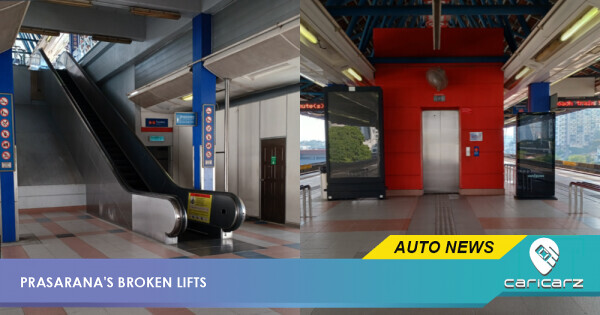
Prasarana's Broken Lifts: Why Anthony Loke Wants Weekly Updates
Anthony Loke wants Prasarana to continue weekly reports on faulty lifts and escalators. Here's why maintenance monitoring matters to commuters.
23-10-2026
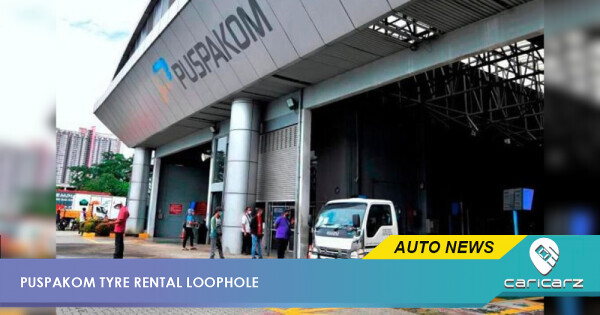
PUSPAKOM Tyre Rental Loophole: Why Is Malaysia Still Struggling To Stop It?
Malaysia's PUSPAKOM tyre rental loophole has resurfaced after a JPJ operation. Here's how the scheme works and why stopping it remains difficult.
23-10-2026
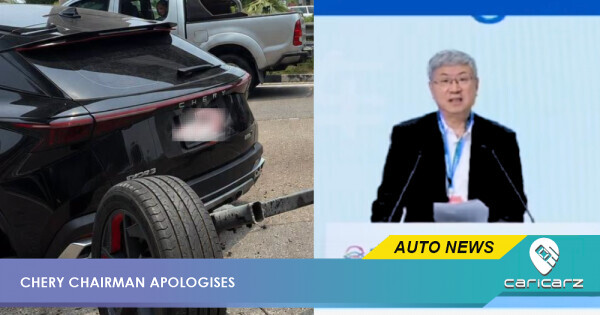
Chery Chairman Apologises Over Malaysia Quality Issues, But What's Next?
Chery chairman Yin Tongyue apologises over vehicle quality issues in Malaysia as the Omoda 5 recall covers 8,878 cars. What happens next?
22-10-2026

Where Is Malaysia's Promised Lemon Law? It's Been A Year
Malaysia's promised Lemon Law is under scrutiny a year after Budget 2026. Here's what happened and what rights car buyers have today.
22-10-2026

Proton's Exports Are Growing, But Not All The Cars Wear Proton Badges
Proton exported 7,370 vehicles in the first nine months of 2026, including Geely cars built in Malaysia. Here's why it matters for Tanjong Malim.
21-10-2026
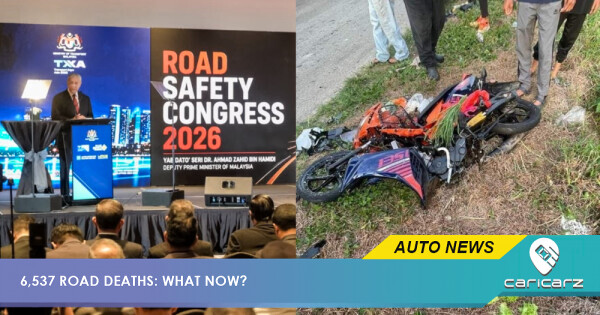
6,537 Road Deaths In 2025 - Can Malaysia's New Safety Push Make A Difference?
Malaysia recorded 6,537 road deaths in 2025. With a new MOT-MIROS proposal underway, can the country meet its target to halve fatalities by 2030?
20-10-2026
Show More
trending_flat
Malaysia First Used Car and EV Consignment Platform
This is the best place to sell your car at true market value. Instead of accepting low dealer trade-ins, we handle everything and connect your car directly to genuine buyers for the highest price.

Understanding CariCarzAutomall Consignment Plan


Approved 200-Check Points Inspection

7 Day Money Back Guarantee

One Year Extended Warranty

No Hidden Charge
