Thai EV Board: New Hybrid Tax Structure, BEV Timeline Extended


Thailand’s National Electric Vehicle Policy Committee (EV Board) has extended the production timeline for battery electric vehicles (BEVs) under the EV3 measure, designed to boost the EV industry. This measure offers subsidies, reduced import duties, and excise tax cuts.
Under the original plan, BEV importers benefiting from these privileges were required to produce one locally-manufactured vehicle for every one imported by 2024, shifting to a 1:1.5 ratio in 2025.

With 84,000 EVs imported between 2022 and 2023, manufacturers would need to produce 124,000 vehicles in 2025. To address declining sales, the EV Board introduced the EV3.5 package, extending the production period. The new framework allows a 1:2 production ratio in 2026 and 1:3 in 2027, albeit with reduced incentives.
However, some manufacturers have raised concerns that EVs made locally under EV3.0 may become less competitive due to higher costs compared to EVs imported under EV3.5.

In parallel, the EV Board approved a new tax structure to support hybrid vehicle production, aimed at facilitating a smoother transition from internal combustion engines (ICE) to EVs by 2025. The revised tax policy incentivizes hybrid electric vehicles (HEVs) and mild hybrids (MHEVs) with seating for up to 10 passengers, requiring manufacturers to invest heavily and use local parts.
From 2026 to 2032, HEVs emitting less than 100g/km of CO2 will face a 6% excise tax, while those emitting 101–120g/km will incur a 9% tax. For MHEVs, the rates are set at 10% and 12%, respectively, for the same emissions thresholds.


To qualify, HEV makers must invest at least THB3 Billion (MYR393 Million) from 2024 to 2027, while MHEV producers must invest THB1 Billion (MYR 131 Million) in 2026 and THB5 Billion (MYR655 Million) in 2028. Both must incorporate local components into their production.
These measures aim to solidify Thailand’s position as Southeast Asia’s hub for EV and electric motorcycle production.
Source: Bangkok Post
Written By
Kumeran Sagathevan
More then half his life spend being obsessed with all thing go-fast, performance and automotive only to find out he's actually Captain Slow behind the wheels...oh well!


JPJ Running Numbers
KUALA LUMPUR
VRY7645
SELANGOR
BSV1849
JOHOR
JH5414J
PULAU PINANG
PSH4566
PERAK
AP1051
PAHANG
CFJ4301
KEDAH
KGJ8575
NEGERI SEMBILAN
NEM6179
KOTA KINABALU
SJV2257
KUCHING
QAB403Q
Last updated 18 Nov, 2026
Fuel Price
Petrol
RON 95
RM 3.97
+1.38
RON 97
RM 4.90
+1.75
RON 100
RM 7.20
+2.20
VPR
RM 8.23
+2.00
Diesel
EURO 5 B10
RM 5.12
+2.08
EURO 5 B7
RM 5.32
+2.08
Last updated 30 Apr, 2026
Related News

Toyota Invests RM7.2 Billion To Boost Thailand Hybrid Car Production
Toyota pledges RM7.2 billion investment to expand hybrid car production in Thailand, boosting jobs and green technology.
24-12-2024

Caricarz Guide to Hybrids: What Are HEVs, PHEVs and MHEVs?
Here’s our quick guide to hybrid vehicles, including the differences between HEVs, PHEVs, and MHEVs.

04-07-2023

PHEVs With Over 80 KM E-Range Get 5% Tax Break in Thailand
Thai PHEV excise tax will now be based on electric-only range, ending outdated fuel tank limits.
05-05-2025

UMWT Hands Over xEV Fleet to MOT
UMW Toyota Motor (UMWT) delivers xEV fleet to MOT, effort reinforces its role in innovating and shaping sustainable mobility policy.
01-05-2025

Practical, Affordable & Realistic, UMW Toyota Motor Launches Its Hybrid Electric Technology To Malaysian Markets!
UMW Toyota Motor just launched its Hybrid Electric technology to Malaysian markets, emphasising it is practical, affordable and realistic. This is the start of a new era in Malaysia with Hybrid Electric Vehicles (HEV)!

28-09-2021
Latest News
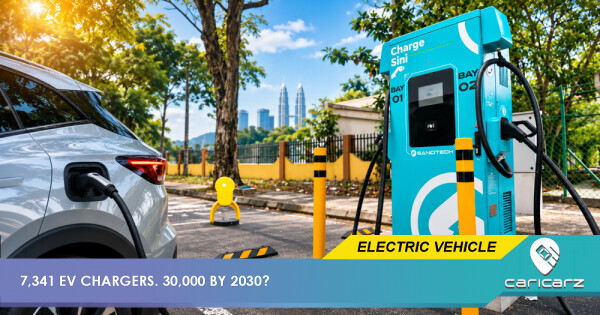
Malaysia's 30,000 EV Charger Target: 7,341 Installed As Of September 2026
Malaysia has 7,341 EV chargers but needs 22,659 more by 2030. Can faster expansion and better rural coverage close the gap?

17-11-2026
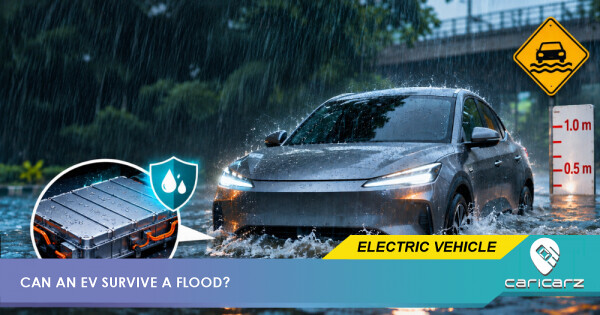
EV Flood Damage: Are Electric Car Batteries Waterproof?
Can an EV survive a flood? Learn how floodwater affects electric car batteries, what damage can occur and what Malaysian EV owners should do.
10-11-2026
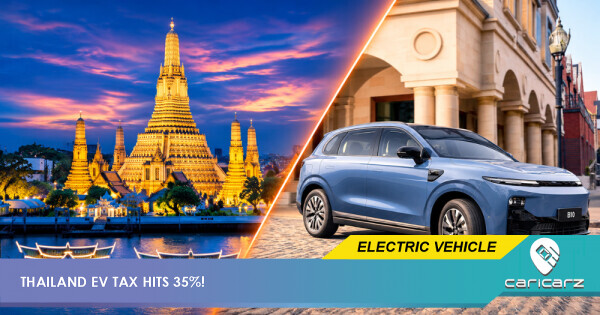
Thailand EV Import Tax Rises To 35% In 2027 — Malaysia Policy Compared
Thailand raises its EV import tax to 35% in 2027. See how Malaysia's RM200,000 CIF and 180 kW CBU EV rules compare, and what buyers should know.
04-11-2026
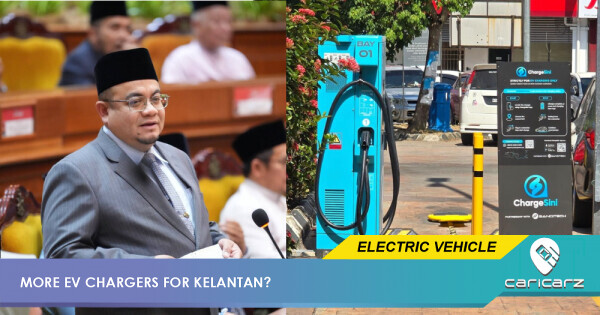
Kelantan Eyes More EV Chargers At Strategic Locations
Kelantan eyes more EV chargers at strategic locations, with 37 units in the Kota Bharu council area and private-sector expansion plans.
04-11-2026
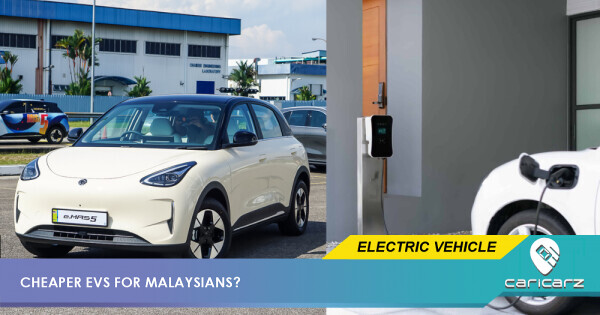
Malaysia Considers New Incentives For Affordable EV Purchases
Malaysia is considering new incentives for affordable EVs, including purchase assistance and charging support. Here's what buyers should know.
04-11-2026
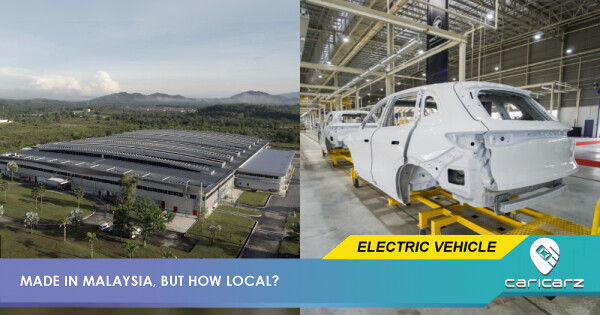
Made In Malaysia, But How Much Of An EV Is Actually Local?
Malaysia's locally assembled EVs reportedly have 20% to 30% local content. Here's why local suppliers face challenges as EV assembly grows.
02-11-2026
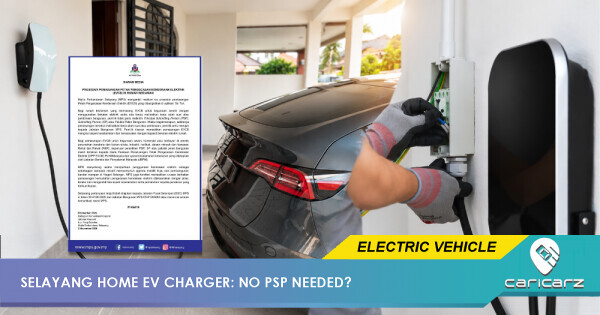
Selayang Council: No Architect Or Engineer Needed For Home EV Chargers Without Renovation
Selayang Council clarifies when home EV chargers need no PSP or SP. Find out what this means for RM15K+ cost estimates, permits and electrical safety.
02-11-2026
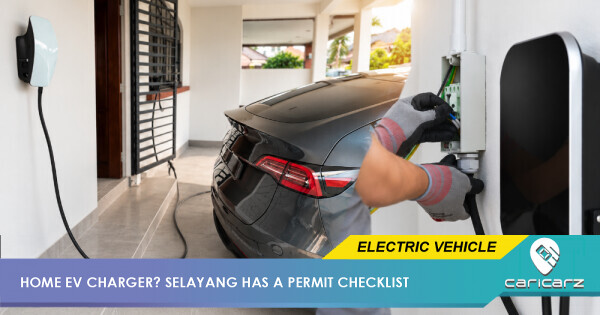
Selayang Home EV Charger Permit: Requirements, Documents And Fees (RM15k++)
Selayang's home EV charger permit checklist covers landed homes. See the RM105 council fees, required documents and reported installation costs.
30-10-2026
Show More
trending_flat
Malaysia First Used Car and EV Consignment Platform
This is the best place to sell your car at true market value. Instead of accepting low dealer trade-ins, we handle everything and connect your car directly to genuine buyers for the highest price.

Understanding CariCarzAutomall Consignment Plan


Approved 200-Check Points Inspection

7 Day Money Back Guarantee

One Year Extended Warranty

No Hidden Charge
