ST: "Free" Public EV Charging Requires EVCS Licence


Running a homestay or thinking of offering free or paid EV charging as an added perk for your guests? While the intention may be noble, Malaysia’s Energy Commission (ST) has made it clear that EV charging is still a regulated activity, even when no payment is involved.

ST clarified during a recent engagement session that any situation where electricity is supplied to others requires licensing. This applies regardless of whether charging is free or paid. Homestays, short-term rentals or even private premises that allow the public to plug in their EVs are therefore not exempt from regulation.

For most homestay operators, the good news is that a Public Distribution Licence (PDL) is usually not required. This is as the majority of homestay chargers operate well below the 100A (around 70kW) threshold.
However, an Electric Vehicle Charging System (EVCS) licence is still mandatory, as the act of distributing electricity to guests qualifies as public use under the Electricity Supply Act 1990.

An EVCS licence is issued by ST and focuses on safety and technical compliance of the charging system. The application carries a one-time processing fee of RM100. Once approved, the licence is valid for 10 years and tied to a specific location.
Annual licence fees are modest for small installations. Operators pay either RM100 per year or RM0.44 per kW of installed charging capacity, whichever is higher. In practice, this means most AC chargers used in homestays will only incur the minimum RM100 annual fee. For example, a 7kW or even a 22kW AC charger still falls below the threshold where the per-kW calculation exceeds RM100.

The approval process typically takes up to 30 days. Applications must include electrical plans endorsed by a Professional Electrical Engineer, and ST assesses the charger based on schematics and safety compliance rather than physical inspection.
Separate costs may apply if product certification such as SIRIM is required, but these are outside the core EVCS licence fee.

Operators should also be aware that running an unlicensed public EV charger is a serious offence. Under the Electricity Supply Act 1990, offenders can be fined up to RM100,000 upon conviction, with an additional fine of up to RM1,000 for every day the offence continues.
ST has reiterated that the definition of “public” is broad. Chargers accessible to consumers, guests or employees are considered public, even if no money changes hands. Only chargers used strictly for private purposes, such as a homeowner charging their own vehicle or a company charging its registered fleet, are exempt from licensing.

As EV adoption grows rapidly in Malaysia and more travellers expect charging access, homestay operators are encouraged to regularise their setups early. Applying for an EVCS licence is a relatively low-cost step that ensures compliance, protects guest safety and avoids regulatory risk.
Gallery

Written By
Kumeran Sagathevan
More then half his life spend being obsessed with all thing go-fast, performance and automotive only to find out he's actually Captain Slow behind the wheels...oh well!


JPJ Running Numbers
KUALA LUMPUR
VRQ7812
SELANGOR
BST8542
JOHOR
JE5243J
PULAU PINANG
PSF6958
PERAK
APL5901
PAHANG
CFH7852
KEDAH
KGJ1946
NEGERI SEMBILAN
NEL9380
KOTA KINABALU
SJU2063
KUCHING
QAB5922P
Last updated 23 Sep, 2026
Fuel Price
Petrol
RON 95
RM 3.97
+1.38
RON 97
RM 4.90
+1.75
RON 100
RM 7.20
+2.20
VPR
RM 8.23
+2.00
Diesel
EURO 5 B10
RM 5.12
+2.08
EURO 5 B7
RM 5.32
+2.08
Last updated 30 Apr, 2026


Latest News
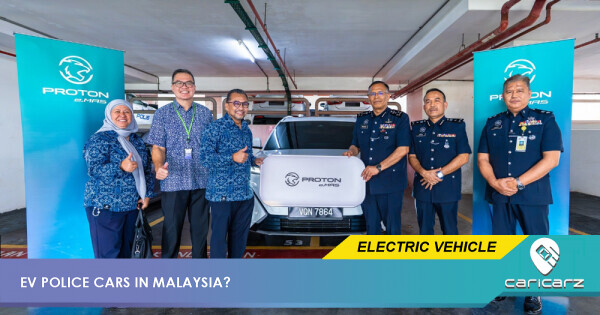
Could An EV Really Work As A Malaysian Police Car? PDRM Is Finding Out
PDRM is testing the Proton e.MAS 5, e.MAS 7 EV and e.MAS 7 PHEV to see whether electrified vehicles could work for Malaysian police duties.

18-09-2026
Malaysia's Electricity Protection Is Now 800 kWh - How Much Power Does An EV Use Per 100 KM?
Malaysia's electricity protection threshold is now 800 kWh. Here's how much electricity popular EVs use per 100 km and what the extra 200 kWh means.
18-09-2026
17 New Mercedes Models Are Coming To Malaysia In 2027 - Here's What We Know
Mercedes-Benz Malaysia plans 17 new models for 2027, with most set for local assembly in Pekan. Here's what we know about its ICE and EV plans.
17-09-2026
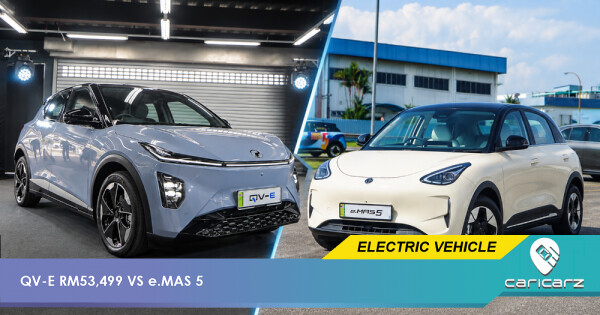
Perodua QV-E Now At RM53,499 Vs Proton e.MAS 5: Which Makes More Sense?
Perodua QV-E now starts at RM53,499 with BaaS under its Malaysia Day promo. See how it compares with the Proton e.MAS 5 on price, range, charging and features.
16-09-2026
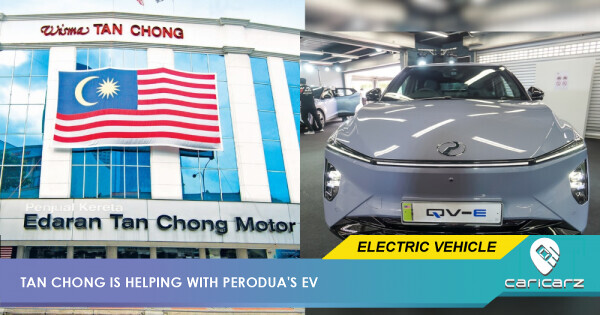
Yes, Tan Chong Is Involved In Perodua's EV. Here's What It's Actually Doing
Tan Chong has signed a three-year agreement to support Perodua's EV production with ED coating, painting and assembly-line services.
15-09-2026

BYD Has A New Plan For Malaysian-Made Cars, And It's Not Tanjung Malim
BYD has dropped its Tanjung Malim plant plan but says Malaysian CKD remains on track, with talks with an unnamed local partner at an advanced stage.
11-09-2026

Malaysia's EVs Are Growing Fast. The Chargers? Not So Much
Malaysia's EV registrations are surging, with 122,286 registered by July 2026. But can the country's 6,416 public EV chargers keep up?
10-09-2026

Could The Proton e.MAS 7 PHEV Get 230 KM EV Range And AWD Next? Its China Twin Says Maybe
The Proton e.MAS 7 PHEV's Geely twin is getting a larger 40.06 kWh battery, around 230 KM WLTP EV range and AWD. Could Malaysia get them too?
10-09-2026
Show More
trending_flat