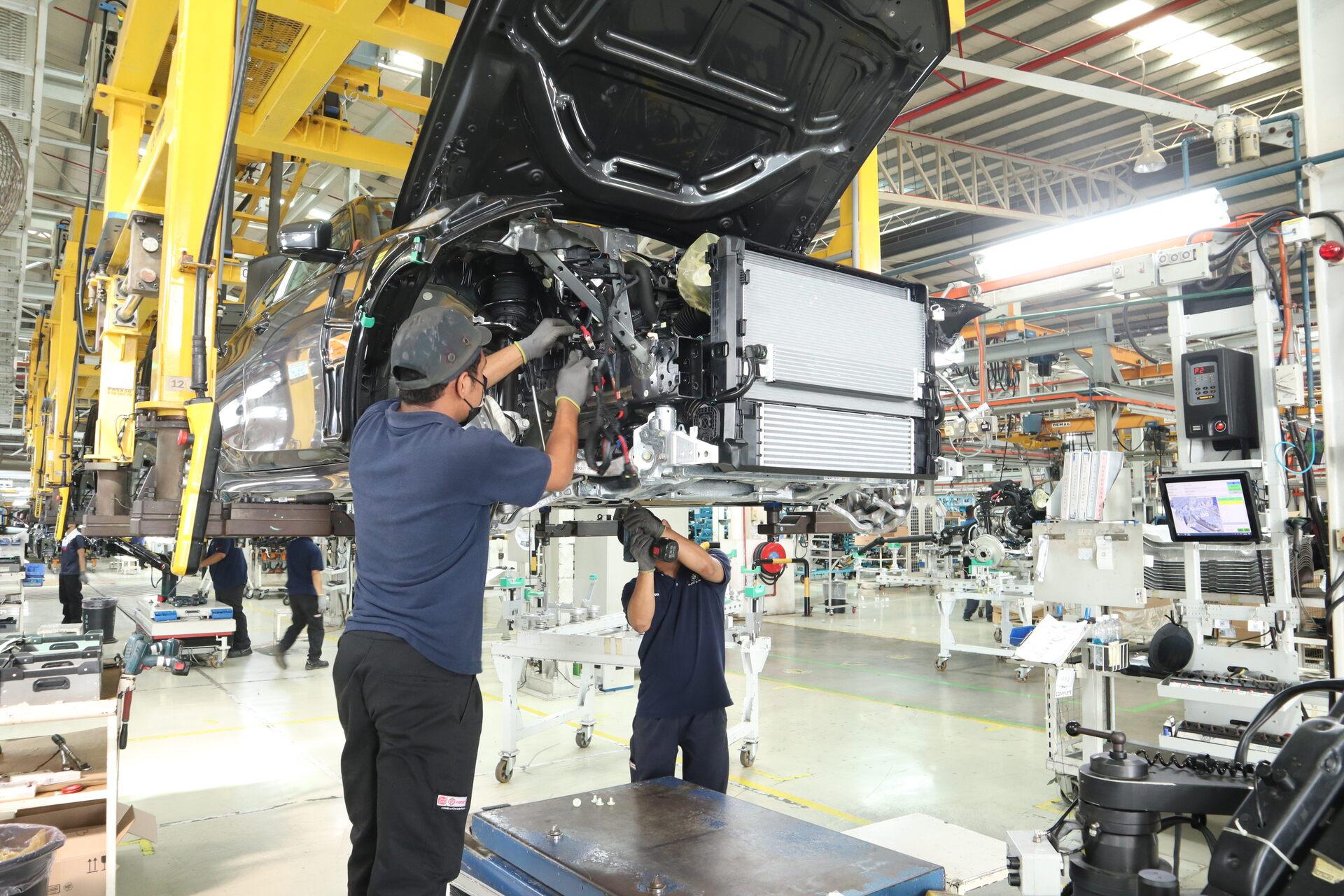
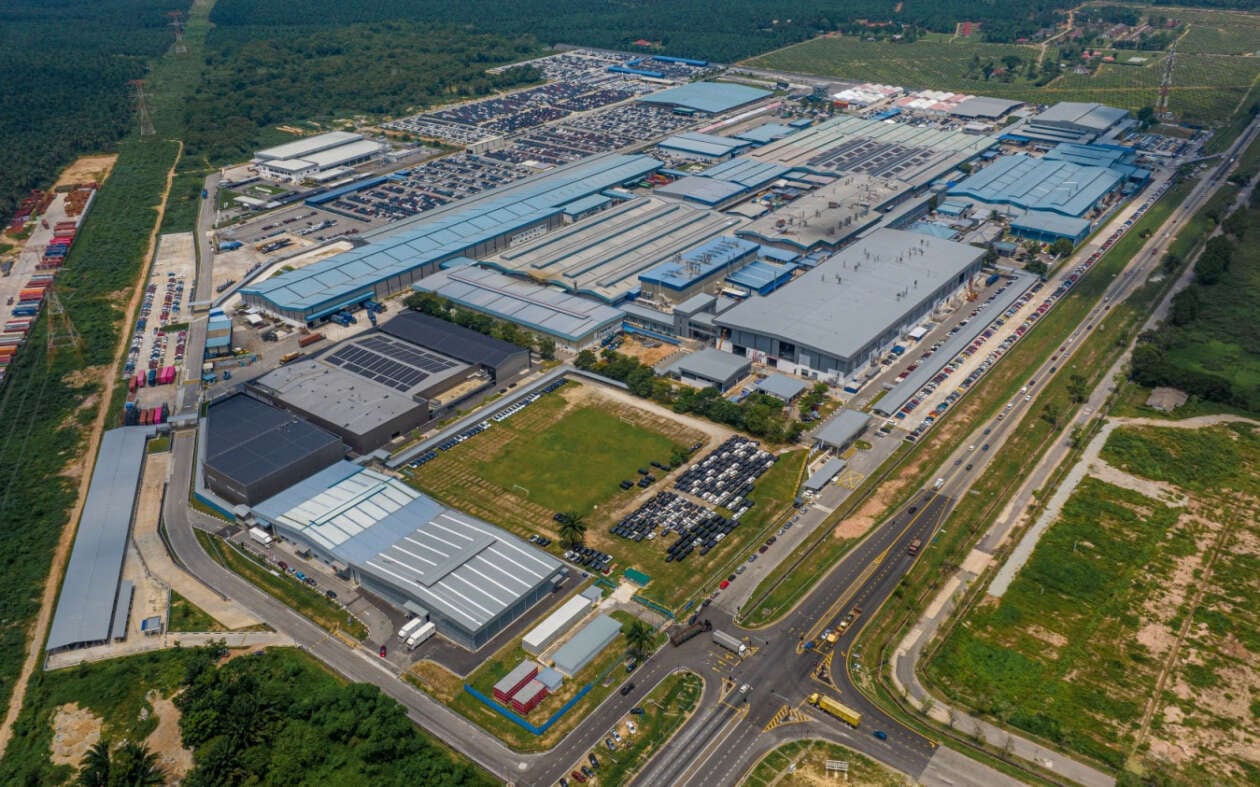
Sime Motors' Inokom vehicle assembly facility in Kulim spans around 200 acres and produces vehicles for several global marques.
We may finally be days away from finding out where BYD's Malaysian EVs will be built.
BYD vice-president and general manager of its Asia-Pacific auto sales division Liu Xueliang has confirmed that the Chinese new energy vehicle (NEV) giant will reveal its next move for Malaysia within a week, as questions continue to surround its long-awaited local assembly plans.
Speaking to Malaysian media in Shenzhen over the weekend, Liu said BYD remains committed to growing its presence here and is continuing to explore opportunities with local partners.
“We will continue to explore, together with local partners, how we can better support the development of Malaysia’s new energy vehicle industry,” Liu said.
But when asked whether BYD's next step would involve partnering with a Malaysian company or taking another manufacturing route, Liu kept his answer short.
“Wait another week and we will announce it.”
WHAT WE KNOW SO FAR
BYD says its next Malaysia move will be revealed within a week. However, it has not confirmed whether this means proceeding with its planned Tanjung Malim plant, assembling vehicles with a local partner such as Inokom, or pursuing another arrangement.
All Eyes On Tanjung Malim – Or Kulim?
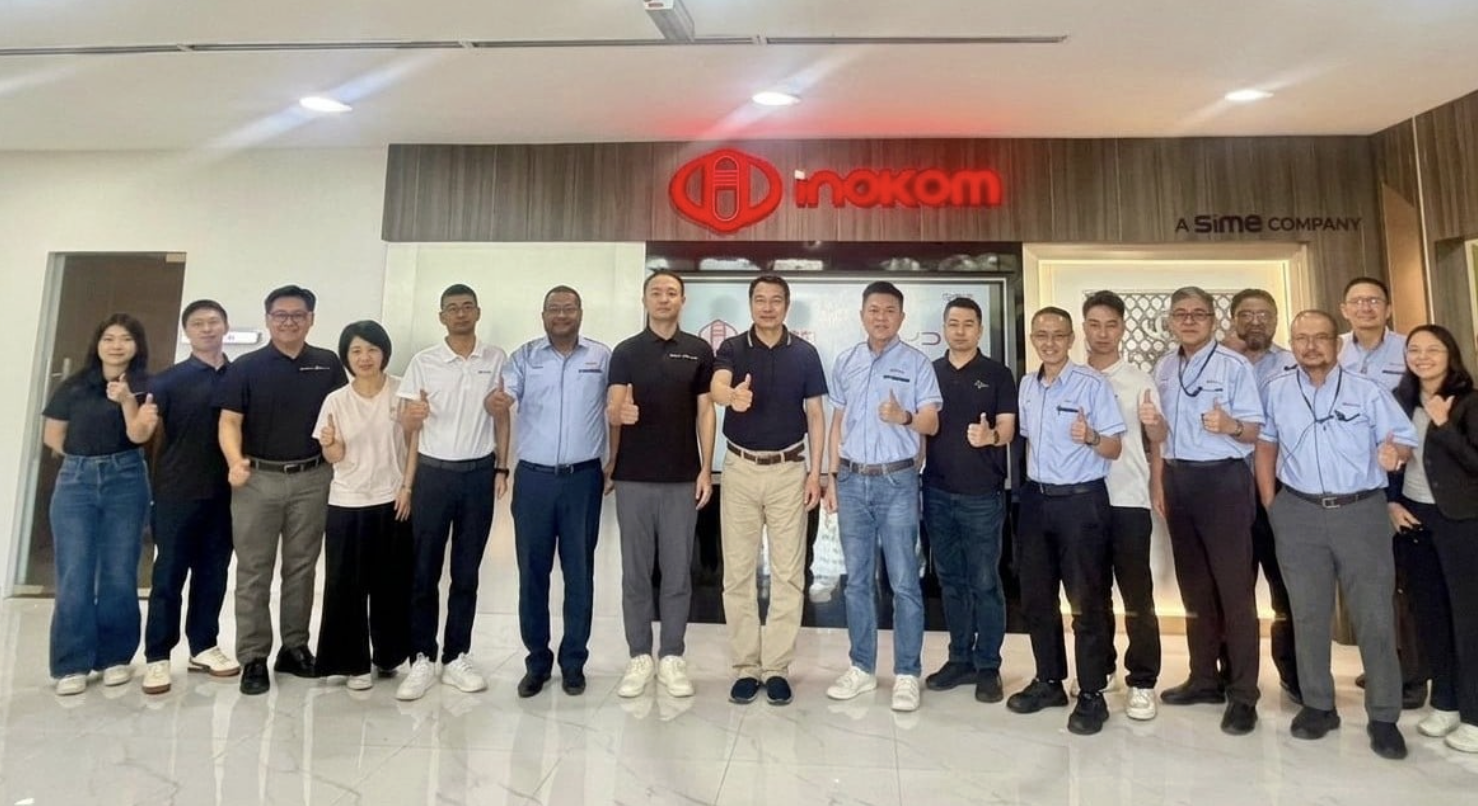
Sime Motors representatives recently visited BYD in Shenzhen, following BYD executives' earlier visit to the Inokom assembly plant in Kulim.
The timing is particularly interesting.
As we reported previously, Sime Motors' leadership visited BYD's headquarters in Shenzhen for discussions aimed at strengthening collaboration and aligning both companies on strategic priorities for Malaysia.
That meeting followed another notable development in May, when Liu and other BYD executives visited Sime Motors' Inokom assembly plant in Kulim, Kedah.
Neither BYD nor Sime Motors has confirmed that Inokom will assemble BYD vehicles. However, the two meetings have inevitably fuelled speculation that contract assembly could emerge as an alternative to BYD's original Malaysian manufacturing plan.
Inokom's Kulim facility has established vehicle manufacturing capabilities spanning body, paint and final assembly operations.
That original plan centred on Tanjung Malim, Perak.
BYD announced plans in Aug 2025 to establish its own local assembly facility there, with operations initially targeted to begin in 2026. However, the project's status has since become uncertain.
As recently as Aug, Investment, Trade and Industry Minister Datuk Seri Johari Abdul Ghani told Parliament that MITI had yet to receive official notification on whether BYD would proceed with the Tanjung Malim investment.
According to Johari, any decision to proceed, postpone or alter the investment remains a commercial decision for BYD.
BYD MALAYSIA: TANJUNG MALIM VS INOKOM
Tanjung Malim, Perak
BYD's originally announced Malaysian assembly plan
Announced in Aug 2025
Operations initially targeted to begin in 2026
BYD has yet to clarify the project's current status
Inokom, Kulim, Kedah
Established Sime Motors vehicle assembly facility
BYD executives visited the plant in May 2026
Sime Motors leadership subsequently visited BYD in Shenzhen
No BYD-Inokom assembly agreement has been confirmed
Why Inokom Makes An Interesting Alternative
If BYD does decide to pivot towards Inokom, it would be entering an established Malaysian contract-assembly operation rather than starting entirely from scratch.
The 200-acre Inokom facility in Kulim currently produces vehicles for several global marques, including BMW, MINI, Porsche, Mazda, Hyundai and Chery.
More importantly for BYD, the facility already has EV assembly experience. The Omoda E5 became the first EV assembled there, while the locally assembled BMW i5 subsequently became the first fully electric BMW assembled in the Asia-Pacific region.
Inokom produced more than 31,800 vehicles in 2025 and works with some 370 local vendors, according to its parent company.
So while an Inokom-BYD agreement remains unconfirmed, the facility already possesses much of the infrastructure and manufacturing experience required for electrified vehicle production.
Why Local Assembly Matters For BYD
Whichever route BYD ultimately chooses, establishing a viable local assembly strategy is becoming increasingly important for its Malaysian business.
Since July 1, 2026, newly approved fully imported (CBU) EVs are subject to significantly tighter requirements, including a minimum declared cost, insurance and freight (CIF) value of RM200,000 and minimum output of 180 kW (245 PS).
Meanwhile, Malaysia continues to incentivise locally assembled EVs, with import duty, excise duty and sales tax exemptions for qualifying CKD EVs currently running until Dec 31, 2027.
WHY IT MATTERS
Malaysia has tightened requirements for newly approved fully imported EVs while maintaining incentives for qualifying locally assembled models. For BYD, localisation could therefore become increasingly important to maintaining a broad and competitively priced Malaysian EV line-up.
This is particularly relevant for BYD, whose Malaysian growth has been built heavily around mainstream EVs rather than only high-priced premium models.
Liu, however, made clear that BYD's Malaysian ambitions extend beyond manufacturing alone.
East Malaysia Is Also On BYD's Radar
Liu also identified East Malaysia as an area with significant room for growth, although BYD would first need models suited to the market.
“We believe East Malaysia still has significant room for development, but first, we hope to have suitable models for the East Malaysian market,” he said.
BYD executives visited Sime Motors' Inokom assembly plant in Kulim, Kedah in May 2026, fuelling speculation over the automaker's Malaysian local assembly plans.
For now, BYD isn't revealing whether its Malaysian manufacturing future lies with its own facility in Tanjung Malim, an arrangement involving Inokom in Kulim, or another route altogether.
But after months of uncertainty, we shouldn't have to speculate for much longer.
A Bachelor of English Language and Literature graduate with an obsession for the finer details. Sofea uses her background in translation to decode the technicalities of automotive innovation. She is dedicated to delivering impactful, meticulously researched articles that provide a narrative far beyond the spec sheet. LinkedIn: https://bit.ly/3C018vv
BYD owners in Malaysia got up close with Steven Gerrard, Michael Owen, Ryan Giggs and other football legends during an exclusive AllStar Legends weekend.
Explore the new BYD Sri Petaling showroom—a game-changing EV hub in KL. Get the scoop on the upcoming 'stadium' delivery experience and win a RM39,900 motorcycle!
Rapid Bus is introducing more electric buses in Malaysia, starting with KL and Penang. But will quieter, cleaner buses actually improve daily commutes?
Malaysia offers EV charging tax incentives, but how does it compare globally? Explore EV charger subsidies, grants and tax breaks in six other markets.
Malaysia First Used Car and EV Consignment Platform
This is the best place to sell your car at true market value. Instead of accepting low dealer trade-ins, we handle everything and connect your car directly to genuine buyers for the highest price.
Understanding CariCarzAutomall Consignment Plan
Approved 200-Check Points Inspection
7 Day Money Back Guarantee
One Year Extended Warranty
No Hidden Charge
About Us
CarzAutoMedia: Stay connected to the latest car news! Get instant updates on new releases, industry trends, and automotive innovations. Your go-to source for 24/7 coverage of everything automotive.
.jpg)