Charging Etiquette Missing as EV Ownership Grows


It’s already happening. What many early EV adopters feared is no longer hypothetical. Over the recent long weekend, a post in the MyEVOC Facebook group highlighted a frustrating scene at the Tapah R&R.
Both DC fast charging bays were occupied by two e.MAS 7s, Proton’s EV built for mass adoption but neither car was actively charging. Meanwhile, a third e.MAS 7 waited nearly 30 minutes just to plug in.
When the waiting couple finally approached one of the drivers, the response was as telling as it was disappointing: “Tadi saya pun tunggu lama gak. Kenapa saya tak boleh buat benda yg sama?”
s-full_normal.jpg)
This wasn’t an isolated incident. It’s a glimpse of what’s to come.
Like us, many have long cautioned against the overly rosy “no queue” narrative used to promote EV ownership. The conversation must shift toward responsibility, civic etiquette, and the urgent need for infrastructure that can withstand peak demand.
On regular days, charging availability may appear sufficient. But, just like petrol stations during festive balik kampung periods or long weekends, demand surges can quickly expose underlying bottlenecks.
Some may argue that drivers should just head to the next charging location, but that advice rings hollow when you’re running critically low on battery and have a family in tow.
Let’s not forget: EV ownership is supposed to be about simplicity and convenience, not complication.
We’ve consistently explained how EV charging curves work, and why there’s usually no need to charge beyond 80%, especially with proper journey planning. But with more affordable EVs flooding the market, that education alone won’t be enough.

Additionally, despite the 80% SOC rule of thumb, if the owner decides to charge to 100%, he/she has the right to do so as they are technically paying for it despite inconveniencing others.
It also doesn’t help that many sales personnel are focused solely on closing a sale, without properly educating buyers on EV ownership and the lifestyle changes it requires.
As more e.MAS 7s fly off the lot, and aggressive discounts from BYD and Chery continue to fuel a surge in adoption, the situation is only set to get more congested. Lets not forget the upcoming e.MAS 5 and Perodua EV expected later this year.
Our own recent trip to Genting Highlands proved the point. Even the premium Shell Recharge station’s DCFC was overwhelmed, with queues forming and drivers anxiously waiting. If that’s the state of flagship locations, what more can be expected at standard highway stops?

The issue now goes beyond infrastructure. It’s about user behaviour and the absence of deterrents.
Idle fees must become standard across all charge point operators (CPOs). Tesla charges RM4 per minute after a grace period. ChargeSini imposes RM2 for every five minutes. Yet many operators still hesitate, fearing customer backlash. That mindset must change.
Uniform enforcement is the only way to normalise responsible charging habits. We say: go with a high-deterrent model like Tesla’s. At RM4 per minute, every idle minute costs you a decent cup of coffee, not Starbucks, perhaps but enough to make people think twice.

Automated barriers could help too, but let’s be realistic. The upfront cost and ongoing maintenance are high. Unlike chargers that can be reset remotely, faulty barriers require physical servicing. That’s why only a few operators, like ChargeSini, have implemented them widely.
Meanwhile, the government’s goal of deploying 10,000 public chargers by the end of 2025 remains more aspiration than reality. Despite confident rhetoric, progress is slow. One of the main obstacles is policy clarity.

The current EV tax exemption ends in Dec 2025, while CKD incentives only run until 2027. There’s still a glaring lack of long-term direction regarding EV policies, tax incentives, and investment frameworks beyond that point.
With such a short investment window, many BEV brands are understandably hesitant to set up CKD operations as they can’t recoup the costs within just two years. Because of this, CPOs are also cautious about rolling out chargers in large numbers, after all charger demand directly correlates with EV adoption.
Yes, EV sales numbers look healthy for now, but that may be due to buyers rushing in before the tax exemption expires.
Adding to the problem, CPOs are being asked to shoulder the financial risk alone, all while navigating bureaucratic red tape from local councils and various regulatory bodies. If Malaysia is serious about EV adoption, it’s time for more than just speeches and slogans.
What we need is policy certainty, streamlined agency processes, and meaningful structural support.

Then there’s the matter of grid access. The recent TNB Gurun issue, which we previously highlighted, clearly shows one CPO monopolising substation power, blocking others from expanding as highlighted by another CPO.
This sort of practice must be regulated. And the policy limiting each R&R to just three CPOs? That needs to be revisited. If other operators are willing to invest, let them. Open competition always benefits the end user plus there needs to be a clear role separation between grid operator and CPO to ensure there is no conflict of interest present.
So yes, charger hogging is a real and growing issue not only by ICE but EVs too. But it's only a symptom of much broader problems - weak enforcement, infrastructure bottlenecks, and inconsistent policy direction.
So we recommend CPOs start with idle fees. Enforce them across the board, and user behaviour will change, quickly. Until then, expect more scenes like Tapah every not and then. Expect more queues like we saw in Genting.
The “no queue” dream was never going to last without serious groundwork and expect the dream of seamless EV ownership to keep slipping further away.
Written By
Kumeran Sagathevan
More then half his life spend being obsessed with all thing go-fast, performance and automotive only to find out he's actually Captain Slow behind the wheels...oh well!


JPJ Running Numbers
KUALA LUMPUR
VRS9245
SELANGOR
BSU2554
JOHOR
JF3280J
PULAU PINANG
PSG1764
PERAK
APL9486
PAHANG
CFH9376
KEDAH
KGJ3641
NEGERI SEMBILAN
NEM1983
KOTA KINABALU
SJU4374
KUCHING
QAB7145P
Last updated 04 Oct, 2026
Fuel Price
Petrol
RON 95
RM 3.97
+1.38
RON 97
RM 4.90
+1.75
RON 100
RM 7.20
+2.20
VPR
RM 8.23
+2.00
Diesel
EURO 5 B10
RM 5.12
+2.08
EURO 5 B7
RM 5.32
+2.08
Last updated 30 Apr, 2026
Related News

China’s EV Shift Is Now an Infrastructure Story
China already operates more than 20 million EV charging facilities, and plans are underway to push that figure to 28 million by 2027.
02-02-2026

JomCharge Introduces New Elite Plan at RM9.90/Month
New JomCharge Elite plan gives EV users 10% off charging at over 1,000 stations for just RM9.90/month.
01-08-2025

Meta Bright Aligns with ChargeHere in Green Energy Push
Meta Bright and ChargeHere teams up, jointly seeking to accelerate EV charging infrastructure in Malaysia.
23-05-2025

Malaysia’s xEV Adoption Up 30% in 2024
Is Malaysia’s xEV surge driven by lasting market demand or by temporary government support that ends soon?
26-02-2025

BHPetrol Launches First EV Charging Station with TNB Electron
BHPetrol launches first 200kW DC Charging Station in partnership with TNB Electron.
21-02-2025

MyZEVA: BEV Growth, Charger Deployment Playing Catch-Up
Malaysia’s EV growth surges but AC charger deployment struggles to keep pace.
23-12-2024

Negeri Sembilan Govt. Approves EVCB Planning Guidelines - 300 EVCB Planned By 2025
The Negeri Sembilan state government has approved the EVCB Planning Guideline, which aims to boost EV adoption.
21-05-2024

ChargeSini Partners G-Power To Expand EV Charging Network In Indonesia
ChargeSini partners with G-Power Indonesia, sets up its first EV Charging Station at Media Central.
19-05-2024
Latest News
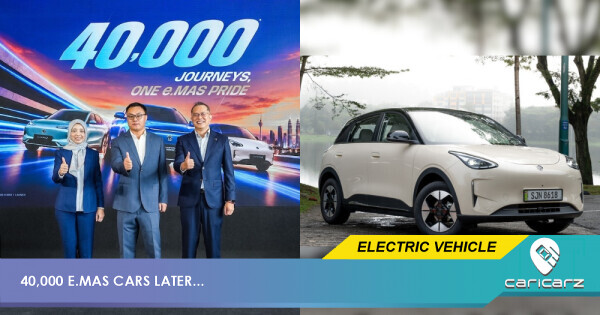
Proton Sold 40,000 e.MAS Cars. But That's Not Even The Most Interesting Number
Proton e.MAS has delivered 40,000 vehicles, but the e.MAS 5's place among Malaysia's best-selling cars tells an even bigger EV story.

30-09-2026
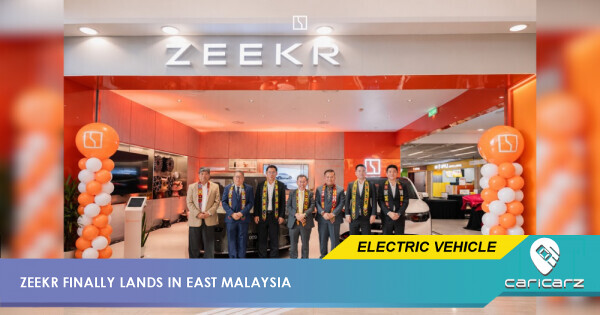
Kuching Gets Zeekr's First East Malaysia Store, With More Coming Next Year
Zeekr opens its first East Malaysia retail location at The Spring Kuching, with permanent sales and service centres targeted for Q1 2027.
29-09-2026
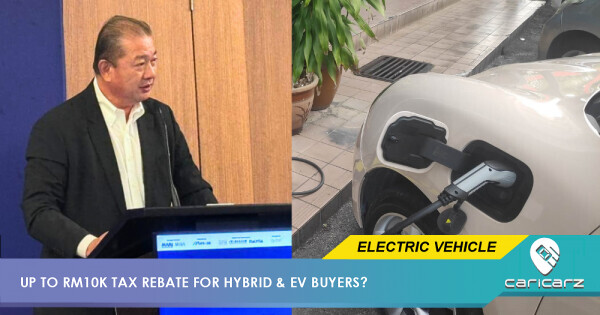
Buying A Hybrid Or EV? MAA Proposes Up To RM10,000 Tax Rebate
MAA proposes a RM7,000-RM10,000 income tax rebate for hybrid and EV buyers under Budget 2027, plus incentives for home charging and old-car scrapping.
28-09-2026
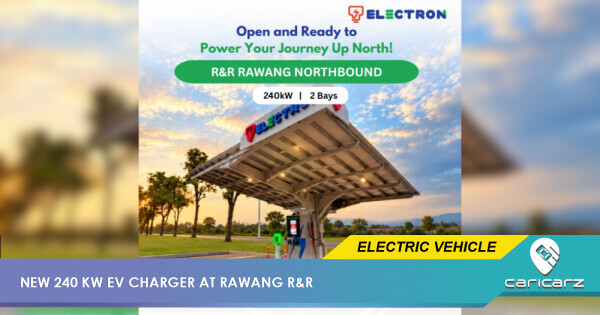
Driving Up North In An EV? There's A New 240 kW Charger At Rawang R&R
TNB Electron's new 240 kW DC EV charger at R&R Rawang Northbound is now live, with free charging available until 29 Sept 2026.
28-09-2026
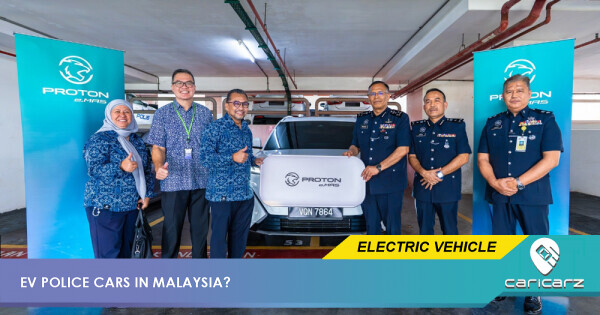
Could An EV Really Work As A Malaysian Police Car? PDRM Is Finding Out
PDRM is testing the Proton e.MAS 5, e.MAS 7 EV and e.MAS 7 PHEV to see whether electrified vehicles could work for Malaysian police duties.
18-09-2026
Malaysia's Electricity Protection Is Now 800 kWh - How Much Power Does An EV Use Per 100 KM?
Malaysia's electricity protection threshold is now 800 kWh. Here's how much electricity popular EVs use per 100 km and what the extra 200 kWh means.
18-09-2026
17 New Mercedes Models Are Coming To Malaysia In 2027 - Here's What We Know
Mercedes-Benz Malaysia plans 17 new models for 2027, with most set for local assembly in Pekan. Here's what we know about its ICE and EV plans.
17-09-2026
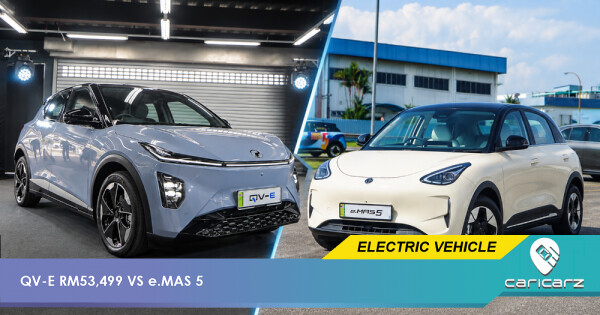
Perodua QV-E Now At RM53,499 Vs Proton e.MAS 5: Which Makes More Sense?
Perodua QV-E now starts at RM53,499 with BaaS under its Malaysia Day promo. See how it compares with the Proton e.MAS 5 on price, range, charging and features.
16-09-2026
Show More
trending_flat
Malaysia First Used Car and EV Consignment Platform
This is the best place to sell your car at true market value. Instead of accepting low dealer trade-ins, we handle everything and connect your car directly to genuine buyers for the highest price.

Understanding CariCarzAutomall Consignment Plan

Approved 200-Check Points Inspection

7 Day Money Back Guarantee

One Year Extended Warranty

No Hidden Charge
